

Short answer
Start with the paperwork rather than the car. Whether you have a claim usually turns on what warranty came with the sale, what the dealer disclosed about the vehicle's history, and what the contract actually says. A used car sold with a manufacturer's warranty may fall under the lemon law, and an undisclosed accident or branded title may be a separate fraud claim.
A used car deal in California is really two things at once: the car, and the stack of paper the dealer slid across the desk. Most buyers only study the first one. The paperwork is where your rights were decided, and it was decided before you ever turned the key.
If you bought a used car from a dealer with problems in California, the question is not only what broke. It is what the dealer was legally required to tell you, put in writing, and post in the window — and whether they did.
The Lemon Pros read used-car contracts for a living. Our practice area is California lemon law, and a large share of it starts with a purchase file that does not say what the buyer was told it said. Call for a free initial consultation and bring the folder.
Below, we walk through what a licensed California dealer owes a used-car buyer at the point of sale, how to read the two documents that control the outcome, and where the dealer’s responsibility stops and the automaker’s begins.
Table Of Contents
- What a California Dealer Owed You Before You Ever Signed
- The Defects That Usually Trace Back to Something Nobody Disclosed
- When Song-Beverly Still Covers a Used Car
- Start With the File, Not With the Phone Call
- What a Dealer or a Manufacturer Can Be Made to Do
- The Clocks That Started the Day You Signed
What a California Dealer Owed You Before You Ever Signed

A licensed dealer is not a private party who happened to have a car for sale. The license comes with duties, and several of them attach at the moment the vehicle is put on the lot rather than at the moment you complain.
Federal law requires a Buyers Guide in the window of every used vehicle a dealer offers for sale. The FTC Used Car Rule sets what that sticker has to say, and the sticker becomes part of your contract once you buy. If the sale was negotiated in Spanish, the Buyers Guide has to be in Spanish too.
California layers its own rules on top. Under the Car Buyer’s Bill of Rights, a dealer selling a used vehicle priced under $40,000 must offer you a two-day cancellation option. Read that word carefully. It is a product the dealer sells you, priced on a sliding scale tied to the vehicle’s price, not a free return window that exists automatically. Plenty of buyers believe they have two days to change their mind and find out otherwise on day three.
There are also limits on the word “certified.” California prohibits a dealer from advertising or selling a used vehicle as certified in a range of situations, including when the title is branded as a salvage or manufacturer repurchase, when the odometer does not show actual mileage, when the car is sold as-is, or when the dealer never handed you the completed inspection report the certification was supposedly based on.
And a dealer cannot knowingly move a defective vehicle without saying so. Known damage, a prior buyback, frame repair — these are disclosure items, not sales-floor discretion. The Song-Beverly Consumer Warranty Act then supplies the warranty framework that sits underneath the whole transaction.
Reading the As-Is Box Before You Read Anything Else
The Buyers Guide has two boxes at the top, and exactly one of them is checked. One says the car comes with no dealer warranty. The other says warranty, and if that box is marked, the form has to spell out whether the coverage is full or limited, which systems are covered, what percentage of parts and labor the dealer pays, and for how long.
Here is the part almost nobody is told at signing: the Buyers Guide overrides contrary provisions in the contract of sale. If the sticker says warranty and the finance paperwork buries an as-is clause four pages in, the sticker wins. That single sentence has rescued a lot of claims that looked dead.
An as-is sale in California also has form requirements. The disclaimer has to be conspicuous, attached to the vehicle in writing, and acknowledged by you before the sale — not slipped into a paragraph of boilerplate. A sloppy disclaimer is a defective disclaimer, and a defective disclaimer leaves the implied warranty standing.
Two more things quietly cancel an as-is sale. If the dealer gave you any written warranty of its own, the implied warranty of merchantability comes back with it. And if the car still carried time or mileage on the original factory warranty, it was never truly an as-is car for anything that warranty covers.
The Defects That Usually Trace Back to Something Nobody Disclosed

Failures on a recently purchased used car tend to fall into a handful of buckets. What matters for a claim is less the category and more whether the condition existed on the lot and whether anyone mentioned it.
- Drivetrain and mechanical: engine failure, transmission slipping or shuddering, worn brakes, a cooling system that was topped off just long enough to make the test drive uneventful.
- Electrical and electronic: climate control that quits, lighting faults, infotainment that reboots itself, modules throwing codes a pre-sale scan would have caught.
- Safety systems: airbag or restraint warnings, ABS faults, driver-assistance features that were disabled or never recalibrated after a repair.
- Body and structure: overspray, mismatched panels, rust under fresh undercoating, weld marks that point to collision work nobody wrote down.
That last group is where disclosure fights usually live. Cosmetic damage on its own rarely supports a warranty claim; cosmetic work applied to hide structural repair is a different conversation, because it speaks to what the dealer knew. Compare the vehicle history report you were shown at the desk against what an independent shop finds. Gaps between those two documents are worth flagging to a lawyer, whether or not the car ends up qualifying as a lemon.
When Song-Beverly Still Covers a Used Car
Coverage on a used vehicle comes from one of three places, and knowing which one applies to you shapes everything that follows. The question of whether your car is a lemon usually resolves into this one first.
The remaining factory warranty. A manufacturer’s written warranty runs with the vehicle, not with the first owner. If months or miles were left on it when you bought, the automaker still owes performance on covered defects and its authorized dealers still have to do the repairs.
A written warranty from the selling dealer. Some dealers sell a 30-day or 90-day powertrain warranty of their own. Once they do, they have made themselves a warrantor, and the paper they issued defines what they owe.
The implied warranty of merchantability. When a dealer sells a used vehicle without a valid as-is disclaimer, California implies a baseline promise that the car is fit to drive. On used goods that implied warranty runs no less than 30 days and no more than three months. Our breakdown of the 30-day used car warranty question covers how short that window really is.
One correction worth making, because it appears everywhere. The familiar shorthand — two repair attempts for a safety defect, four for everything else, thirty days out of service — comes from a presumption the statute writes for new vehicles in their first 18 months or 18,000 miles. On a used car, whether the dealer or manufacturer got a reasonable number of chances is judged on the facts of your case. That cuts both ways. It can mean fewer attempts than four are enough when the defect is severe.
Start With the File, Not With the Phone Call

The instinct after a breakdown is to call the salesperson. Resist it for an hour. What you say in that first call gets written into a note in the dealer’s system, and you want to know what your own paperwork says before you say anything.
Pull the Contract, the Buyers Guide and the Warranty Booklet Together
Lay them side by side on a table. You are looking for places where they disagree, because a contradiction between two documents the dealer produced is worth more than any argument you can make.
On the retail installment sale contract, find the warranty section and read which box is checked. Find any separate cancellation option agreement and check whether you actually bought it. Find the service contract, if one was sold, and note the seller — a third-party administrator is not the dealer, and the remedies differ.
On the Buyers Guide, check the box at the top and the systems list underneath it. If you did not receive a copy of the Buyers Guide at all, write that down; the dealer was required to give you one. If the sale happened in Spanish and every document you were handed is in English, write that down too.
In the warranty booklet or the automaker’s coverage lookup, confirm the in-service date and the mileage terms. That tells you whether the manufacturer is still on the hook — often better news than a dealer warranty.
Put the Complaint in Writing and Address It to the Right Party
Once you know where coverage comes from, send written notice to whoever holds it. A factory-warranty defect goes to the manufacturer, with the repair handled through an authorized service center. A dealer-warranty defect goes to the dealer. When you are unsure, notify both and say so in each letter.
Keep the letter short and specific. Name the defect, the date it appeared, the mileage, and what it does to your ability to use the car safely. Then state what you want — a repair, a refund, a replacement, or reimbursement for what the failure has already cost you in towing or a rental.
Send it in a way that produces proof of delivery. A phone call you cannot prove happened is, for practical purposes, a phone call that did not happen.
Build a Record the Dealer Cannot Argue With
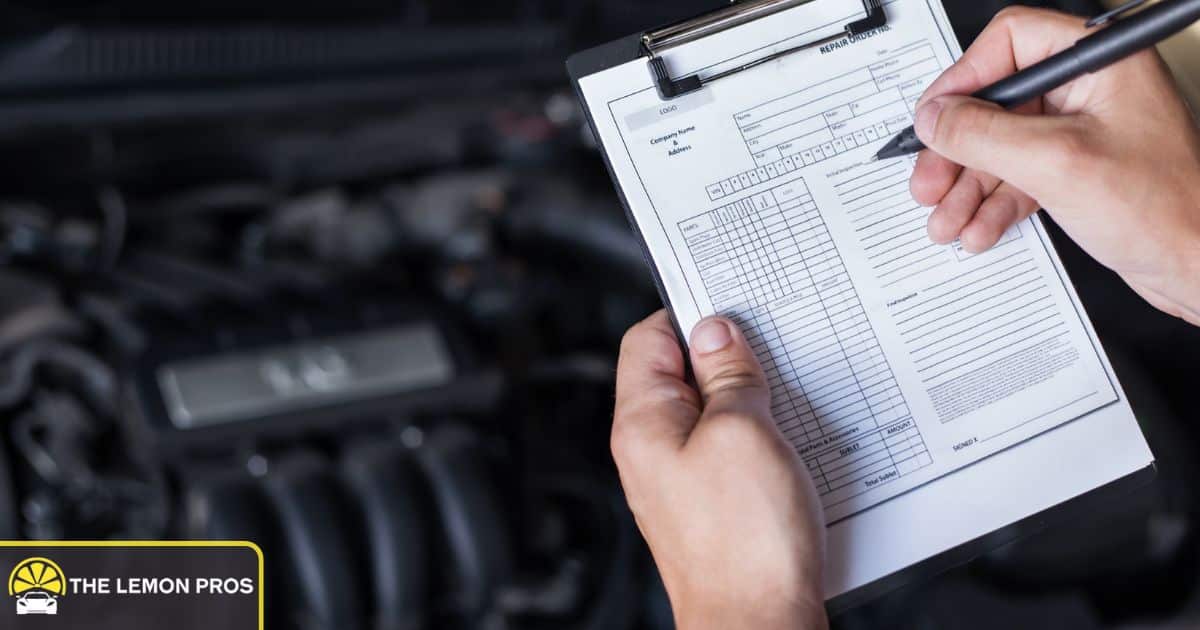
Ask for a printed copy of every repair order, every time, including the ones where the shop says it found nothing. Check that the complaint typed at the top matches the complaint you actually described. Those two lines drift apart more often than you would think, and a claim can turn on the difference between “customer states hesitation on acceleration” and “customer states no issue found.”
Note the date in, the date out, and the mileage on each visit. Days out of service add up quietly, and nobody reconstructs them accurately from memory a year later.
Film the symptom while it is happening. A dash warning that clears itself before you reach the service drive is hard to describe and easy to record. Keep receipts for tows, rentals, and any part you paid for out of pocket. If the dealer will not put its findings in writing, pay an independent shop for a written inspection — that report is yours, and the dealer does not get to edit it.
Have a Lawyer Read the File Before You Sign Anything Else
Dealers often respond to a complaint with an offer, and the offer usually comes with paper. A trade assistance form, a goodwill repair agreement, a release. Signing any of those without knowing what claim you are giving up is how a viable case quietly ends.
An attorney who works in this area reads the file for things a buyer would not think to look for: an arbitration clause, a disclaimer that fails the statutory form requirements, an advertised certification that the inspection report does not support, a service contract sold by a party who is now unreachable. If the problem turns out to be misrepresentation rather than a broken part, that is auto fraud territory and it follows a different path.
We handle used-vehicle matters on a contingency basis, so there are no attorney fees up front. If you want a second read on the file before you answer the dealer, book a free consultation and we will go through it with you.
A DMV Complaint and a Civil Claim Run on Separate Tracks
The DMV licenses California car dealers, and its Occupational Licensing program takes complaints about how a licensed dealer conducted a sale. That process can lead to an investigation and to discipline against the license.
What it does not do is write you a check. Money for a defective vehicle comes from a civil claim under Song-Beverly, or from a fraud or misrepresentation claim, or from a settlement negotiated before either is filed. The federal Magnuson-Moss Warranty Act can also apply where a written warranty was involved.
The two tracks do not conflict, and running both is common. Our page on whether a dealer can legally sell a lemon covers where the line sits between a bad car and an unlawful sale.
What a Dealer or a Manufacturer Can Be Made to Do

Three outcomes come up repeatedly, and which party pays depends on which duty was broken.
Repurchase. The warrantor takes the car back and refunds what you paid into it, including the down payment, monthly payments, and finance charges, along with related costs such as towing and rental. The refund is reduced by a mileage offset tied to how far you drove before the first repair visit for that defect. The offset is a formula, not a negotiation, and it is worth having someone check the math.
Replacement. You take a comparable vehicle instead of cash. Some buyers prefer this and some regret it. Read what happens to your financing before agreeing.
Cash and keep. You keep the car and take an agreed sum. This can make sense for an annoying but livable fault. It makes far less sense for a safety defect, and you will carry a disclosure obligation the day you resell.
One detail buyers rarely hear: when a manufacturer repurchases a vehicle in California, that car has to be titled and labeled as a lemon law buyback before it can be resold. If your own car’s title carries that brand and nobody mentioned it, you have a disclosure problem sitting on top of the defect.
Is There Any Way to Hand the Keys Back After Signing?
California has no general cooling-off period for vehicle purchases, whatever the salesperson may have implied. Three narrow exits exist.
The first is the two-day cancellation option, and only if you bought it. The second is a conditional delivery that falls through: if you drove off before the financing was approved and the lender later declines the contract, the deal can unwind, and the dealer has to give back your down payment and trade-in. The third is a claim that the sale itself was unlawful, which is not a return so much as a case.
Where a warranty covers the defect and the repairs have failed, a repurchase is the realistic route back out. That is a slower road than a return, and it runs through the warrantor rather than the sales manager.
When the Dealer Is the Defendant, Not the Automaker
Warranty claims usually point at the manufacturer. The dealer becomes the target when the problem is with the sale rather than the machinery.
That includes selling a car the dealer knew had frame damage, advertising a vehicle as certified when the statute barred it, disclaiming warranties in a form the law does not accept, failing to hand over a Buyers Guide, or telling you something about the car’s history that the file contradicts.
These claims can be brought alongside a warranty claim rather than instead of one. Bring the independent inspection report, the advertisement or listing as it appeared, and the full sale file. Written evidence of what you were promised is what separates a strong misrepresentation claim from a frustrating memory of a conversation.
The Clocks That Started the Day You Signed

Several deadlines start at delivery, and they run at different speeds.
The cancellation option, if you bought it, expires in two days and carries a mileage cap. The implied warranty on a used vehicle can close in as little as 30 days. A dealer’s own written warranty runs whatever term the paper says. The factory warranty runs on the automaker’s calendar, which started with the original owner, not with you.
Sitting above all of that is a statute of limitations on a breach-of-warranty claim, generally four years, with the start date depending on the type of warranty involved. That question is fact-specific enough that it is worth asking a lawyer rather than assuming. A used car lemon law attorney can tell you which clock is closest to running out on your file.
The practical risk is smaller than the legal one for most buyers. Every month you keep driving a defective car adds mileage to the offset, adds wear the dealer will blame for the failure, and puts you in a vehicle you already do not trust. Getting the file reviewed early costs nothing and preserves options that quietly disappear later.
Frequently Asked Questions
I bought the car two days ago. Can I still cancel it?
Only if you bought and paid for the option. California’s Car Buyer’s Bill of Rights requires a dealer selling a used vehicle under $40,000 to offer you a two-day cancellation option, but it is a paid add-on rather than an automatic right, and the price is capped on a sliding scale by the vehicle’s price. If you declined it or were never offered it, there is no general cooling-off period on a car in California, whatever you may have been told. Check your contract for a separate cancellation agreement before you assume either way.
The window sticker said one thing and the contract said another. Which one controls?
The sticker does. Federal law requires a Buyers Guide in the window of every used vehicle a dealer offers, showing whether it is sold as-is or with a warranty, and the FTC Used Car Rule states that the Buyers Guide overrides contrary provisions in the sales contract. One more detail worth knowing: if the sale was negotiated in Spanish, the dealer has to give you a Spanish-language Buyers Guide. A missing or contradicted sticker is worth photographing before it disappears.
The car broke down on the drive home. Does that change anything?
It can, though not for the reason most buyers expect. Breaking down immediately does not by itself void an as-is sale. What it does is make it much harder for the dealer to argue the fault developed after you took delivery, which matters if the problem is one a reasonable inspection should have caught and the dealer represented the car as sound. Get it towed rather than driven, keep the tow receipt, and put your complaint to the dealer in writing the same day. That timeline is the evidence.
Does “certified pre-owned” mean the car came with a warranty?
Usually yes, and that is the point of paying the premium, but read what was actually certified. Manufacturer-backed programs carry a real written warranty from the automaker. Dealer-branded “certified” programs are sometimes an inspection checklist and a service contract sold by a third party, which is a different thing with different remedies. California also bars a dealer from advertising a vehicle as certified in certain circumstances, including when the title is branded. If the car was sold to you as certified, the paperwork behind that word is the first thing worth pulling.
The used car still had factory warranty left. Who is responsible, the dealer or the manufacturer?
The manufacturer, for anything the factory warranty covers, and that is often better news than it sounds. A used vehicle still inside the original manufacturer’s written warranty is generally not an as-is sale for those defects, because the warranty runs with the car rather than with the first owner. The repair obligation stays with the automaker and its authorized dealers. The selling dealer may still be on the hook separately if it misrepresented the car or failed to disclose known damage, which is a different claim from the warranty one and can be brought alongside it.
What Paperwork Should I Gather Before Calling Anyone?
Pull the purchase contract, the buyer's guide window form, any warranty documents, the financing agreement, the title or registration, and every repair order. Add a vehicle history report if you have one. That set shows what coverage came with the car and what the dealer told you at the sale.
The Dealer Never Mentioned the Car Had Been Wrecked. What Now?
An undisclosed collision history can be a fraud or nondisclosure claim against the seller, separate from any warranty claim against the manufacturer. Order a vehicle history report and have a body shop document the repairs. Written proof of what the dealer said or advertised matters as much as the damage itself.
Can I Make the Dealer Pay for Repairs on a Used Car?
It depends on what coverage came with the sale. If a manufacturer warranty is in force, take the car to a franchised dealer for that make and the repairs should be covered. A dealer-issued warranty or service contract is enforced against whoever sold it, under its own written terms.
How Long Do I Have to Act After Buying a Defective Used Car?
Move quickly, because delay costs you evidence and repair-attempt opportunities. A warranty claim generally must be filed within four years of when you knew or should have known you had one, and the defect must have first appeared while warranty coverage was in force. Report problems to a franchised dealer.
Should I Keep Making Payments While I Sort This Out?
Yes. A pending complaint or claim does not pause a loan, and missed payments can lead to repossession that complicates everything else. Keep paying, keep copies of each repair order, and handle the warranty or disclosure issue on its own separate track while the account stays current.
Have a Lemon Law Attorney Read What Your Dealer Sold You
California gives used-car buyers real protection, but most of it is written into documents that get skimmed at signing and filed in a glovebox afterward. The contract, the Buyers Guide, and the warranty terms decide who owes you a repair, a refund, or nothing at all.
If the car you bought from a dealer has a defect the shop cannot fix, do not guess at which of those documents applies. The Lemon Pros will read the file with you, tell you which party is responsible, and handle the claim from there. There are no attorney fees up front. Call today for a free case evaluation.

Michael Saeedian, Esq.
Founding PartnerMichael Saeedian, Esq. is a California Lemon Law attorney and a founding attorney of The Lemon Pros; he develops tailored strategies to pursue the full compensation you're owed.
View Attorney Profile →