

Short answer
The dealership is the face of the process, but a California lemon law claim usually runs against the manufacturer, because it is the manufacturer's warranty that was breached. The dealer becomes the right target where the problem is what you were told at the sale, such as an undisclosed accident or a branded title. Both can be brought together.
You bought the car at a dealership. The salesperson was there, the finance manager was there, and the service department is there every single time something goes wrong. So when the vehicle turns out to be defective, the dealership is the natural place to point. That instinct makes sense. It is also the reason a lot of California buyers burn six months getting nowhere.
Here is what rarely gets explained at the service counter. The duty to buy back a defective vehicle belongs to whoever issued the written warranty, and that is the automaker, not the store that sold you the car. Your dealership repairs the vehicle as the manufacturer’s authorized facility. It bills the manufacturer for that work. It does not control the buyback decision and, in most cases, cannot approve one no matter how reasonable the service manager is being with you.
That does not put the dealer in the clear. A dealership carries its own exposure, on entirely different grounds: what it told you about the car, what it failed to disclose about prior damage or a branded title, whether the service contract you paid for was ever actually delivered, how the vehicle was advertised. Different claims. Different proof. Different remedies. They can move at the same time as the warranty case.
The Lemon Pros handle California warranty and auto fraud claims and nothing else. This page sorts out the split so you stop aiming your energy at the wrong party. Want it done for you? Bring us the paperwork at a free case review.
Table Of Contents
- The Defect That Triggers a Manufacturer’s Duty to Repurchase
- How Your Paperwork Tells You Who Is on the Hook
- Where to Aim the Claim When the Dealer Shrugs
- Who Pays What, and Out of Whose Pocket
- Replacement: The Automaker Funds It, the Store Hands You the Keys
- Restitution: The Buyback Check Comes From the Manufacturer
- Cash and Keep: A Settlement, Not a Statutory Remedy
- Filing Suit Against Two Defendants on Two Theories
- Which Agency Polices the Dealer, and Which Polices the Automaker
- When the Dealership Is the One You Sue
- Questions That Settle Liability Before You Sign
- How a Two-Party Case Actually Moves
The Defect That Triggers a Manufacturer’s Duty to Repurchase
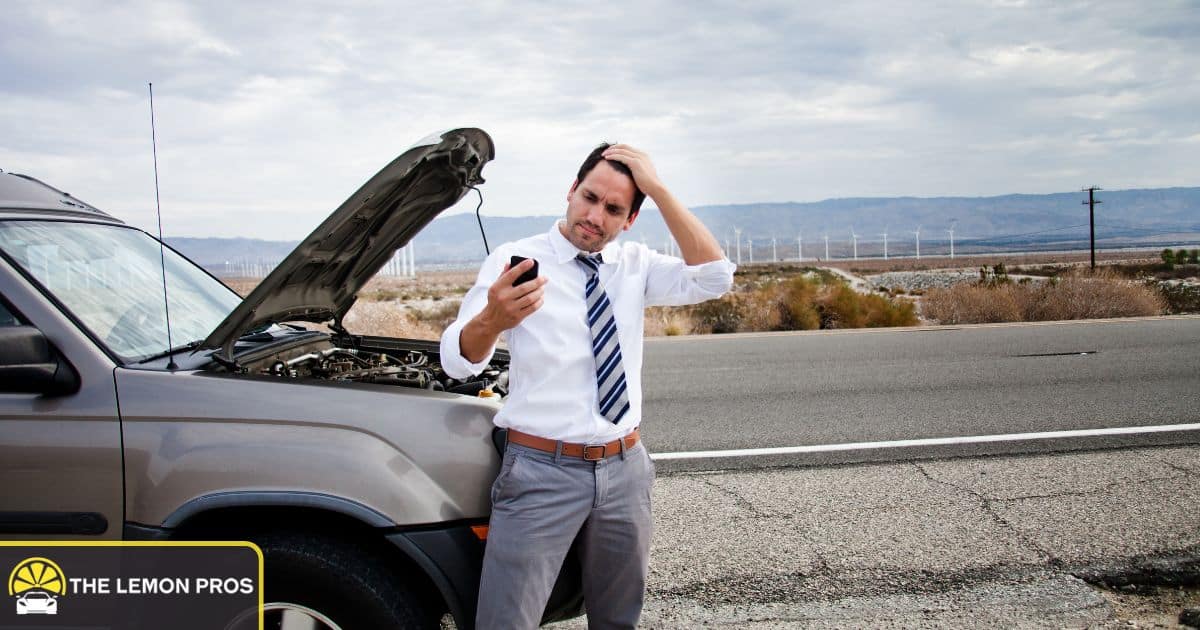
Forget the word lemon for a second and look at what actually creates the obligation. California’s Song-Beverly Consumer Warranty Act says that a manufacturer who sells a vehicle with a written warranty has to make that vehicle conform to the warranty. If it cannot do that after a reasonable number of attempts, the statute directs the manufacturer to replace the vehicle or make restitution.
Read that again and notice the subject of the sentence. The manufacturer. Not the dealer group, not the finance company, not the salesperson who told you the car had never been in an accident.
So the defect has to do two things. It has to substantially impair the use, value or safety of the vehicle, which is a real threshold and not a synonym for annoying. A transmission that shudders into neutral at freeway speed clears it. A rattling trim panel does not. And the defect has to be covered by a warranty that was in force, because the warranty is the entire source of the automaker’s duty. No warranty, no repurchase obligation, however badly the car is behaving.
California also gives buyers a presumption that speeds things up when the failures pile up early. If the problem shows up within the first 18 months or 18,000 miles and the vehicle has been through four or more repair attempts for the same defect, or two attempts for a defect likely to cause death or serious injury, or has sat out of service for more than 30 days, the law presumes a reasonable number of attempts has been made. That presumption is a shortcut, not a ceiling. Claims are regularly pursued outside those numbers on the general rule.
How Your Paperwork Tells You Who Is on the Hook
You can answer the liability question yourself in about twenty minutes with the documents in your glovebox. Three of them do most of the work.
Start with the warranty booklet. Whose logo is on it? Whose name appears in the words “we warrant”? That entity is the warrantor, and the warrantor is the party the repurchase remedy runs against. Then pull your repair orders. The letterhead belongs to the dealership, but look further down for the warranty claim number, the labor operation code and the zero-dollar customer total. That is the store billing the manufacturer for work performed on the manufacturer’s behalf. Finally, read your purchase contract, which is a separate agreement between you and the dealer and governs a completely different set of promises.
Two documents, two defendants. Once you see it that way, the “take it up with corporate” line you got from the service drive stops feeling like a brush-off and starts looking like an accurate description of the law.
A handful of signals suggest your vehicle is a candidate for a warranty claim rather than an ordinary repair dispute:
- The same fault keeps returning after repairs that were supposed to fix it
- The fault affects how you use the car, what it is worth, or whether it is safe to drive
- The vehicle was under a written warranty when the trouble first appeared, even if that warranty has since run out
- Your repair orders show open-ended diagnoses, parts on backorder, or long stretches with the car at the shop
If your file is thin, an independent inspection at your own shop is worth the money. An outside technician who documents the fault gives you something the manufacturer’s own network did not produce, and it is useful later when the other side argues nothing was ever wrong.
Used Cars: The Answer Depends on Whose Warranty You Got
Used vehicles are where people get this backwards most often, because there are three very different situations and they look identical from the driver’s seat.
If the original factory warranty was still running when you bought the car, you are in the same position as a new-car buyer. The automaker wrote that warranty and the automaker carries the obligation. A certified pre-owned vehicle usually adds a manufacturer-backed extension on top, which keeps the liability in the same place.
If the coverage was a warranty the dealership itself issued, the picture flips. California’s warranty statute puts a used-goods warrantor into much the same position a manufacturer occupies, which means the store that wrote the promise is the one that has to stand behind it. Read who signed the document rather than assuming.
And if the car was sold “as is” with the Buyers Guide required by the FTC’s Used Car Rule checked accordingly, the warranty path is probably closed. The fraud path is not. A dealer who concealed frame damage or a salvage history is exposed regardless of what the warranty box said. Our used car warranty attorneys untangle which of the three you are in. Buy from a private party and none of this applies, since the dealer obligations and the federal rule both attach to licensed dealers.
Where to Aim the Claim When the Dealer Shrugs
Most people escalate up the dealership ladder. Service advisor, then service manager, then the general manager, then a long letter to the dealer principal. It feels like progress. It rarely produces a buyback, because none of those people hold the authority you are asking them to exercise. The four steps below aim your effort at the party who does, while preserving whatever you have against the store.
Step One: Build a Record That Names Both Parties
Two piles. In the first, everything that proves the vehicle did not conform to the warranty: every repair order including the ones marked “no problem found,” the dates the car went in and came out, loaner paperwork, and the running count of days you were without it. Photograph the odometer at each drop-off. That pile builds the case against the manufacturer.
The second pile is about the sale itself. The purchase contract, the window sticker, the Buyers Guide, the advertisement or listing you responded to, the service contract you paid for, and any text or email in which someone described the car’s condition or history. That pile builds the case against the dealership, and it is the one almost everyone throws away.
Write dates and names as you go. “Spoke to Danny in service, 3/14, told the shudder is normal for this transmission” is evidence. A memory of roughly when it happened is not.
Step Two: Put the Demand in Front of the Automaker
Write to the manufacturer’s customer relations address, which is printed in your warranty booklet, and send it certified so you have proof of delivery. Copy the dealership so the store cannot later claim surprise, but understand that the copy is courtesy and the original is the actual demand.
Keep it dry. Year, make, model, VIN, purchase date, selling dealer, and then a chronological list of repair visits with dates and complaints. State plainly that the vehicle has not been conformed to warranty after a reasonable number of attempts and that you are requesting repurchase or replacement under California law. Attach the repair orders. Skip the adjectives. A manufacturer’s case reviewer processes a stack of these and responds to the ones that read like a file, not a grievance.
Step Three: Keep Your Warranty Claim and Your Fraud Claim Apart
These two claims have different requirements, and blending them weakens both.
A warranty claim does not require you to prove that anybody knew anything. The manufacturer’s obligation to make the car conform is not about state of mind, which is why you do not need evidence of bad faith to have a case at all. Knowledge does matter to the size of it. Where a manufacturer’s failure to repurchase is found to have been willful, California permits a civil penalty on top of the buyer’s damages, though whether that applies is decided case by case and is never something to count on.
A fraud or concealment claim against the dealer runs the other way. There, what the seller knew and chose not to say is the heart of it. Undisclosed accident history, a rolled-back odometer, a prior branded title, a service contract that was charged and never registered. Those live in auto fraud territory and carry their own remedies. If you have both, plead both, separately.
Step Four: Get Counsel Who Names the Right Defendants
The practical value of a lawyer here is not intimidation. It is that someone reads the file and works out who is properly named, on what theory, and what each of them is realistically responsible for. Name only the dealer and the buyback claim goes nowhere. Name only the manufacturer and a genuine misrepresentation at the point of sale never gets addressed.
California’s warranty statute also shifts reasonable attorney fees and costs to the manufacturer when a buyer prevails, which is why firms in this area work on contingency and why you should not be paying hourly for a warranty case. We do not charge fees unless the case resolves in your favor. If you want an outside read before you commit to anything, book a consultation.
Who Pays What, and Out of Whose Pocket

Outcomes get discussed as though they come from a single pot. They do not. Some are funded by the automaker and merely handled at the store, and one of them is not a statutory remedy at all. Knowing the difference tells you who you are actually negotiating against.
Replacement: The Automaker Funds It, the Store Hands You the Keys
A replacement is a substantially identical vehicle, same model and comparable equipment, with the defect absent. You will pick it up at a dealership and sign paperwork there, which makes it feel like a dealer transaction. It is not. The manufacturer authorizes and funds it. The store is executing an instruction. You surrender the defective vehicle at the exchange and can be charged for damage beyond ordinary wear.
Restitution: The Buyback Check Comes From the Manufacturer
Restitution returns what you paid, reduced by a mileage offset for the use you got before the defect first appeared. The calculation runs off the actual price paid and picks up the collateral pieces too: sales tax, registration, and finance charges, with the remaining loan balance paid off directly to the lender. Trade-in credit is part of the figure.
The offset is where these numbers get argued, because it turns on when the problem first showed up rather than when you complained. An early first repair order is worth real money. We break the arithmetic down in our guide to the lemon law buyback.
Cash and Keep: A Settlement, Not a Statutory Remedy
Nothing in the statute entitles you to keep the car and take a payment. That arrangement exists because manufacturers sometimes prefer writing a check to absorbing a vehicle, and it gets negotiated rather than demanded. It can suit a buyer who likes the car and can live with the fault. Two things to weigh before signing: the release usually closes out the defect for good, and a repurchase history attached to the VIN follows the vehicle when you sell it.
Filing Suit Against Two Defendants on Two Theories
A complaint can name the manufacturer for breach of warranty and the dealership for what happened at the sale, in the same action. That is often the right structure, because the facts overlap even though the legal theories do not. It also removes the finger-pointing, since both parties are in the room and neither can redirect you to the other. Plenty of the reasons a buyer ends up suing a dealership have nothing to do with whether the car qualifies as a lemon.
Which Agency Polices the Dealer, and Which Polices the Automaker
Regulators split along the same line. Dealers in California are licensed and investigated by the DMV’s Occupational Licensing division, which is the right destination for advertising violations, disclosure failures and contract problems. Federal used-car disclosure standards sit with the Federal Trade Commission. Neither agency will get your car bought back, and a complaint is not a substitute for a claim. Both create a dated record, which has a way of mattering later.
When the Dealership Is the One You Sue
The store becomes the primary defendant when the problem started before you ever drove off. Told the car was accident free when the history says otherwise. Prior branded title left out of the conversation. A service contract you were charged for that was never actually in force. A vehicle advertised at one price and papered at another. Those are dealer claims through and through, and they survive whether or not the vehicle ever qualifies for a warranty repurchase. Our page on suing a dealer for selling you a lemon walks through what that looks like.
Questions That Settle Liability Before You Sign

Standard buying advice tells you to inspect the car. Fine, do that. The more useful exercise is working out, before you sign, who would owe you anything if this vehicle turned out to be trouble. Four questions get you there.
Who wrote the coverage? Ask to see the actual warranty document rather than a printout of coverage terms. Factory-backed means the manufacturer is the warrantor. Dealer-issued or third-party administered means the obligation belongs to somebody else entirely, and you should know that somebody’s name.
What does the Buyers Guide say? On a used car the sticker in the window is a federally required disclosure and it controls whether there is any warranty at all. “As is” checked means as is, whatever the salesperson said out loud.
Is the history in writing? Verbal assurances about accidents, prior use or title status are hard to prove later. A short written statement in the deal jacket, or an email, converts a conversation into something a claim can rest on.
Does the paperwork match the pitch? Read the contract for a service agreement you did not ask for, a price that drifted, or add-ons that appeared between the handshake and the finance office. Discrepancies between what was said and what was signed are the source of a large share of dealer claims.
How a Two-Party Case Actually Moves

A straightforward warranty claim against a manufacturer, with clean repair orders and an obvious defect, often resolves in a few months without anyone seeing a courtroom. Add a dealer defendant and the timeline stretches, because there is a second party with its own counsel, its own version of the sale and its own view of what it knew.
Early on the automaker’s case reviewer decides whether to open a repurchase file. Some claims end there. If not, discovery begins, and this is where a dealer defendant changes the texture of the case: the sale gets examined, not just the repairs, and documents from the store’s file come into play. Settlement discussions often follow, sometimes with the two defendants offering different things for different reasons. Manufacturer arbitration programs exist and can be quick, though the outcomes are typically narrower than what a claim would seek, so it is worth understanding what you would be trading before agreeing to it.
One thing that stays constant regardless of how many parties are named: the strength of the file. Cases where the repair orders are complete, the dates line up and the sale documents are intact move faster and end better than cases built on recollection.
Frequently Asked Questions
Is it the dealership or the manufacturer that has to buy the car back?
The manufacturer, in almost every case, and this is the single most useful thing to understand about your situation. The repurchase obligation under California’s warranty law sits with whoever issued the written warranty, which is the automaker. The dealership is the manufacturer’s authorized repair facility, not the party that owes you a refund. Knowing this changes who you are actually negotiating with and explains why pressure applied at the dealership so often goes nowhere.
The dealer told me to take it up with the manufacturer. Are they right?
On the buyback, largely yes. On everything else, not necessarily. The dealership still has its own exposure if it misrepresented the vehicle, failed to disclose known damage or a prior branded title, or sold you a service contract that was never delivered. Those are separate claims against the dealer that can run alongside a warranty claim against the manufacturer. So the answer is not that the dealer is off the hook, it is that the dealer is on the hook for different things.
Does it matter whether the dealership knew about the defect?
For a warranty claim, no. The manufacturer’s obligation to conform the vehicle to warranty does not depend on anyone’s state of mind, which is why you do not have to prove bad faith to have a case. Knowledge matters for a different reason: if the seller knew about a defect or prior damage and concealed it, that opens fraud and consumer-protection claims with their own remedies. It also matters to the size of a warranty claim, since California allows a civil penalty on top of your damages where a manufacturer’s failure to repurchase was willful.
I signed an arbitration agreement. Can I still bring a claim?
Usually yes, though the forum may change. Arbitration clauses are common in vehicle purchase contracts and they generally direct the dispute out of court rather than extinguishing it. Whether a particular clause is enforceable, and whether it even reaches a warranty claim against a manufacturer who was not a party to your purchase contract, are questions worth having someone read the actual document for. Do not treat the presence of an arbitration paragraph as the end of the road.
The dealership has closed. Do I still have a case?
Very likely, because your warranty claim was never against the dealership to begin with. A manufacturer’s written warranty is honored at any authorized dealer for that brand, so a closed store does not strand you: the repair history follows the vehicle through the manufacturer’s system. What a closure does complicate is a claim aimed at the dealer itself, such as a misrepresentation at the point of sale. Keep your purchase contract and every repair order, since those documents outlive the business.
What paperwork from the dealership should I gather first?
Pull your purchase contract, the window sticker or buyer's guide, the financing agreement, and every repair order the service department handed you. Repair orders matter most, since they date each visit and describe the complaint you reported. Ask the dealer for copies of anything missing. Service departments keep these records and will usually print them on request.
Can I keep using the same dealership while a claim is pending?
Yes. Keep reporting the defect and keep collecting repair orders, because those documents continue to build the record. Bringing a claim does not void your warranty or bar you from the service drive. If one store becomes difficult, any franchised dealer for that make can perform the warranty work instead.
The dealership offered to trade me into another car. Should I take it?
Look at the numbers before you agree. A trade often rolls negative equity from the defective vehicle into a new loan, and it can end your ability to seek a repurchase on the old one. Get the offer in writing and have it weighed against what a Song-Beverly claim might return.
Does it change anything that I bought the car used from a dealership?
It can. After Rodriguez v. FCA in October 2024, a used car sold carrying only the remaining balance of the original factory warranty generally no longer qualifies for a repurchase or replacement. A certified pre-owned vehicle sold with its own manufacturer warranty may still qualify. Your paperwork decides which one you have.
What if the dealership never really repaired the car and papered over it?
Concealment at the service level is a separate problem from the sale itself. Repair orders sometimes read no fault found when you reported a clear symptom. Keep your own dated notes, photos and videos of the fault. That record can contradict the file and support both a warranty claim and a claim against the dealer.
Not Sure Which Party Owes You? Send Us the File.
The hardest part of this situation is usually not the law. It is that you have been arguing with the wrong party for months and nobody told you. Once the warranty side is aimed at the manufacturer and the sale side is aimed at the dealership, the whole thing starts behaving like a case instead of a runaround.
Bring us your repair orders and your purchase contract and we will tell you which claims you have and against whom. The Lemon Pros take California warranty and auto fraud matters on contingency, so there is nothing out of pocket to find out where you stand. Request a free case evaluation and we will read the paperwork with you.

Michael Saeedian, Esq.
Founding PartnerMichael Saeedian, Esq. is a California Lemon Law attorney and a founding attorney of The Lemon Pros; he develops tailored strategies to pursue the full compensation you're owed.
View Attorney Profile →