

Short answer
While the vehicle is under warranty, take warranty repairs to a franchised dealer. That is what generates the repair orders recording each attempt, and those documents are what a California lemon law claim is built on. Routine maintenance such as an oil change can go to any competent independent shop without affecting the warranty.
Yes, you should take your car to the dealer for service if it is still under warranty, but for a routine oil change or other basic maintenance, a qualified independent shop is fine. The very reason many people choose a dealer is that factory-trained technicians know your vehicle, have access to all the parts, and can handle warranty work correctly. For example, if your car has a recall or a software update, the dealership is usually the best place to have that work completed. Once your warranty ends, compare cost, convenience, and service quality to decide where to take your ride.
The Lemon Pros has helped hundreds of California consumers pursue relief under the state's Lemon Law and maintains a strong reputation backed by numerous positive client reviews. Our attorneys handle claims involving defective cars, trucks, SUVs, motorcycles, and electric vehicles, seeking buybacks, replacements, and cash settlements from manufacturers. Led by attorneys recognized within the legal community, the team is dedicated to helping consumers enforce their rights at no upfront cost. If you're driving a defective vehicle, contact us for a free case evaluation.
Our practice area is focused exclusively on California Lemon Law claims, and we are ready to help you understand your options. Call us today for your free consultation.
This guide explains when you should use a dealership for car service, the benefits of dealer repairs versus independent mechanics, how warranty service works, and what to do if problems arise with the dealership's service department.
What Do Dealership Service Departments Offer?

Your local dealership offers a one-stop shop for many of your car service needs. The dealership provides scheduled maintenance appointments, including the typical oil change, tire rotation, and brake pad replacement. Additionally, dealerships provide warranty work free to the driver and can aid in other diagnostic tasks.
To have the car serviced at the dealership means that the vehicle is being looked at by certified technicians who understand that make and model. These technicians also receive access to specialized tools that the local mechanic may not have. While the local independent mechanic may just be a small operation, the dealership is much larger. There's typically a service manager overseeing the operations and technicians of all levels available.
How Service Records Can Affect a Lemon Law Claim
A California driver brought a vehicle in for repeated transmission problems while the car was still under warranty. Since the owner consistently returned to authorized repair facilities and kept detailed repair invoices, the repair history clearly showed the manufacturer had multiple opportunities to fix the defect. That documentation helped support the consumer's Lemon Law claim and made it easier to demonstrate the vehicle's ongoing problems.
This is why service location matters when you are dealing with a defective vehicle. While independent shops can perform many routine repairs, dealership documentation can become especially valuable when warranty disputes or Lemon Law issues arise.
What Are the Pros and Cons of Taking Your Car to the Dealer for Service?
Dealerships get a bad rep for being expensive, and often they are. But the price tag buys you a few real advantages, so it helps to weigh both sides before you hand over the keys. On the plus side, dealer service departments employ technicians who are trained on your specific make. A Honda or BMW tech at the brand's dealership has seen your engine hundreds of times and has the factory diagnostic equipment to match, which is why complex diagnostics on newer cars are safer performed at a dealership.
Vehicle maintenance costs can add up quickly. According to the American Automobile Association's 2025 Your Driving Costs analysis, maintenance, repairs, and tire expenses average 11.04 cents per mile, which works out to roughly $1,656 per year for a driver traveling 15,000 miles annually.
Dealers install genuine factory parts, keep the paperwork that keeps your warranty intact, and many hand you loaner vehicles so you're not stranded for the day. Some services may even be complimentary. Several automakers include free scheduled maintenance for the first few years or miles when you buy the car, so those early oil changes cost you nothing at the dealer.
The downsides are just as real. Dealer labor rates usually run higher than an independent's, sometimes by a wide margin. Wait times can stretch longer because the bays are booked. Also, service advisors work on commission, so aggressive upselling of things you may not need yet is common.
Independent mechanics flip the equation. A good local shop is often cheaper, treats you like a regular, and will tell you straight when a repair can wait. Independents generally offer more personalized service than a dealership, where you're one appointment among dozens.
The trade-off is that a general shop may not have the model-specific tools, software, or genuine parts for every job, especially on newer or luxury vehicles, although brand specialists can close much of that gap. Neither choice wins outright. The table below lays out the main points side by side.
| Service Aspect | Dealer | Independent Mechanic |
|---|---|---|
| Cost | Typically higher labor rates and parts pricing due to dealership overhead and manufacturer standards. | Generally lower costs with more flexibility to negotiate labor rates and parts options. |
| Expertise | Factory-trained technicians with brand-specific training and access to manufacturer resources. | Broad mechanical experience that varies by shop, technician, and vehicle make. |
| Warranty Compliance | Repairs are documented through the manufacturer network and can help maintain a clear warranty record. | Repairs generally do not void warranties if properly performed and documented, but requirements should be verified. |
| Parts Quality | Typically uses genuine manufacturer parts by default. | May offer a choice between OEM, aftermarket, or used parts depending on preference and budget. |
| Turnaround Time | May take longer due to busy service departments and scheduled appointments. | Often provides faster service for routine maintenance and repairs. |
| Customer Experience | Offers structured service departments, waiting areas, loaner vehicles, and standardized processes. | Usually provides a more personalized experience with direct communication and closer customer relationships. |
"The biggest mistake we see consumers make is focusing only on the repair bill instead of the long-term impact of their service decisions," says Michael Saeedian of The Lemon Pros. "When a vehicle has repeated defects, complete and organized repair documentation can make a significant difference in protecting a consumer's rights."
Is It Worth Getting a Service Done With a Main Dealer?
The franchised, manufacturer-authorized dealership for your brand is the official service channel, not a third party. When you book there, you're paying for the full brand package: factory-trained staff, genuine parts, and work that meets the manufacturer's own standards. For some jobs, that package is worth every dollar. In our experience, warranty repairs and software updates belong at a main dealer because they protect your coverage and keep your service records clean.
Manufacturer recalls belong there too, since only a franchised dealer can carry out recall work, at no cost to you. Complex diagnostics on newer vehicles also lean in the dealer's favor: they have the factory scan tools, the technical bulletins, and the parts availability to pull a correct new part rather than guess with an aftermarket substitute.
If a warranty claim ever comes up, a paper trail from the authorized dealer removes any argument about whether the car was serviced correctly. And if your car came with free scheduled maintenance from the automaker, the main dealer is where you cash that in. Quality assurance is the real product here, the brand is putting its name on the repair.
The catch is cost and, sometimes, the customer service experience. Main dealers charge premium rates, and how you're treated varies wildly from one location to the next. So it's worth doing a little homework before you book. To judge whether a dealer earns its price, get an itemized quote and compare it against an independent shop for the same job. After that, read recent reviews, and pay attention to comments about upselling and honesty.
You can also ask whether repairs come with a warranty, and for how long. After that, you should confirm that they use genuine factory parts, not just OEM parts equivalents. If the quote is fair, the reviews are solid, and the work is guaranteed, a main dealer is often worth it, especially for anything warranty-related or brand-specific.
When Might an Independent Local Mechanic Be the Better Choice?
An independent local mechanic may be a better option once your vehicle is out of warranty and you are no longer required to use an authorized dealership service center. Many drivers choose independent shops because they can save money on labor costs, maintenance, and repairs while still receiving quality service from technicians with strong mechanical knowledge.
For routine maintenance, some owners prefer quick-service locations for oil changes and basic services because they can provide faster appointments and convenient facilities. However, you should carefully consider the type of repair, the quality of parts used, and whether the shop uses OEM parts or aftermarket parts that meet your vehicle's needs.
During the warranty period, it is generally best to follow manufacturer requirements and keep detailed service records. Using an unauthorized repair facility for warranty-related issues could create complications with warranty coverage or a potential Lemon Law claim, especially if the repair history is unclear. Dealerships have access to manufacturer resources, security systems, and vehicle-specific information that can be valuable when diagnosing complex problems.
Choosing between a dealer and an independent mechanic depends on your vehicle's condition, repair needs, budget, and long-term ownership plan. A reputable local mechanic who takes good care of your vehicle and documents all work can be a practical choice after warranty expiration, while dealership service may be preferable when factory support, OEM parts, or warranty protection are important.
The 4-Part Dealer vs. Independent Mechanic Decision Test
We recommend using four factors when deciding where to service your vehicle: coverage, complexity, cost, and documentation.
| Factor | What to Consider |
|---|---|
| Coverage | Is your vehicle still under factory warranty? If yes, a dealership may provide advantages because warranty repairs, recalls, and manufacturer updates are handled through the factory network. |
| Complexity | Is the issue related to advanced electronics, safety systems, software, or a vehicle-specific component? Dealership technicians often have access to manufacturer diagnostic tools and technical bulletins that independent shops may not have. |
| Cost | Is the repair routine maintenance like an oil change, brake inspection, or tire rotation? An experienced independent mechanic may provide similar quality service at a lower price. |
| Documentation | Could this repair history become important later? If you suspect your vehicle may qualify as a lemon, keeping detailed records from authorized repair visits can strengthen your claim. |
The right choice is not always the dealership or the independent mechanic. The right choice depends on what protects your vehicle and your wallet in that specific situation.
How Long Can a Dealership Hold Your Car for Auto Repairs?

The time it takes for a dealership to return your vehicle to you depends on how busy the shop is, how difficult the repair is, and if there's a service bay available for the work. Extensive jobs, such as engine or transmission replacements, are going to require factory-trained technicians who are often booked out further than those doing routine maintenance.
How long can a dealership hold your car for repair? As per the California Lemon Law (Song-Beverly Consumer Warranty Act), the dealership cannot have your vehicle for more than a month for the same problem. However, there are fewer restrictions if the Lemon Law doesn't apply in your situation.
What to Do When a Dealership Has Had Your Car for an Extended Period?
A dealership can hold the car a little longer if they are waiting for parts to come in or the service is backlogged. It may also take more time for a major repair. To be sure you are treated fairly, review all service agreements and the warranty to understand what's acceptable. If you feel that you are being taken advantage of or not treated fairly, you may want to consult with a Lemon Law attorney for more support.
Above all, maintain constant communication with the dealership. Call regularly for updates and document all of the communication. Be polite, but don't be a pushover. The dealership may legitimately have your car for a month, but they should never have your car for three months or any excessive amount of time.
What Happens if the Dealer Can't Fix Your New Car?
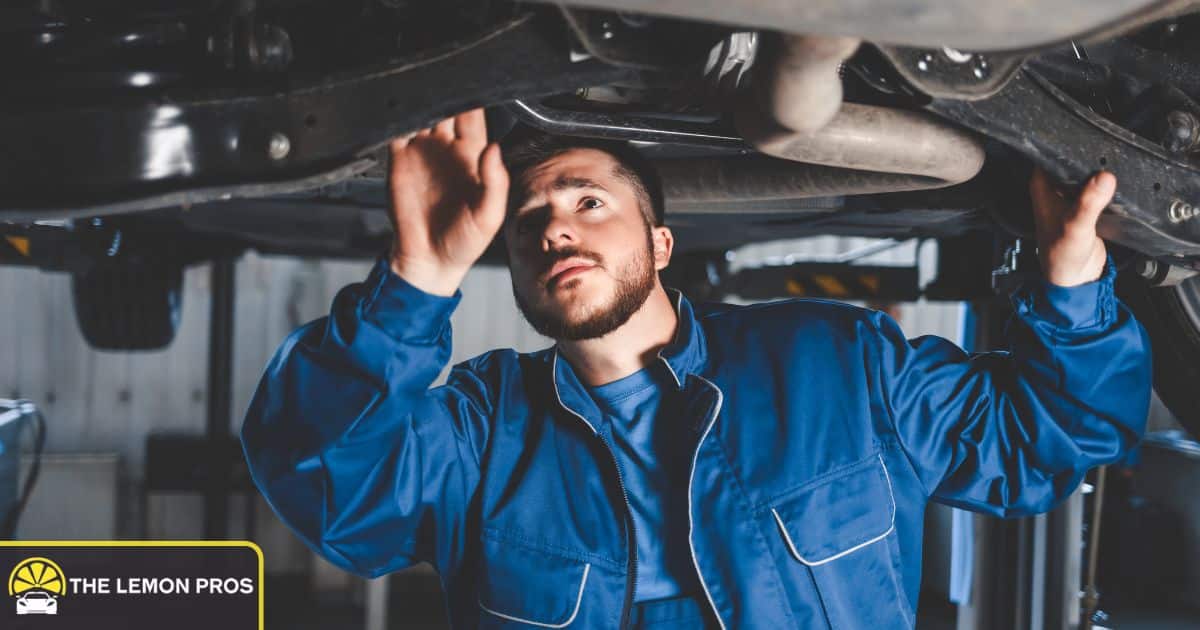
If you've been waiting, you may wonder what happens if the car dealership can't fix your car. If the car is still under warranty, you may be entitled to file a Lemon Law claim. The following criteria are necessary to file a claim in California:
- The particular problem must substantially affect the use, safety, or value of the vehicle. It can range from anything as major as engine failure to something trivial, such as air conditioning malfunctions.
- The car must be covered under warranty. For new cars, lemon coverage exists for the first 18,000 miles or 18 months of ownership, which is still within the timeframe of the manufacturer's warranty.
- You must have allowed a reasonable number of repair attempts. If there's a serious safety issue, only two attempts are required. All others must have had at least four attempts. However, the dealership cannot keep your car for more than thirty days per complaint.
In our experience, missing repair records are one of the biggest obstacles people face when pursuing relief. Many drivers remember bringing their vehicle in several times but do not have copies of repair orders, invoices, or communication with the dealership. Keeping every document from each visit creates a clearer timeline of what happened. You may be eligible for a Lemon Law buyback or a replacement vehicle. A qualified Lemon Law attorney can help defend your rights against the manufacturers.
When to File a Lemon Law Claim
While you may not want to spend money on a lawyer, it's important to file a Lemon Law claim as soon as your vehicle becomes eligible. Thankfully, most lawyers work on a contingency basis, meaning they only get paid when you win your case, so you may not have to pay anything upfront.
A lawyer is going to look over the case facts and ensure your car meets the requirements. If there are more steps to take before filing the claim, your lawyer will tell you what to do next. Otherwise, you are required by law to send the manufacturer and dealership a demand letter, outlining what you expect from the claim. In our experience, most dealers and manufacturers are going to do nothing with this letter unless you are represented by a lawyer.
Suing a car dealership is a daunting task to take on yourself, but it's possible to get a resolution if you choose the right lawyer. Whether you need to return a car to the dealership or have a lemon, an attorney will fight for your rights and get you everything you are entitled to under CA law.
When Should You Stop Taking Your Car to the Dealer for Service?
There is usually a point when paying dealer prices no longer makes financial sense, and most vehicle owners reach that point after a few years of ownership. We have found that the two biggest factors to consider are your vehicle's age and whether it is still covered by the manufacturer's warranty.
While your vehicle is under warranty, using a dealer service department can be beneficial. Car dealers maintain manufacturer service records, use approved diagnostic tools, and can provide warranty-related repairs with OEM parts. A complete maintenance history can also increase buyer confidence if you decide to sell your vehicle because service receipts show that the car was properly maintained.
Once the factory warranty expires, the calculation changes. You are no longer relying on dealership warranty coverage, and routine maintenance costs can become significantly higher. At that stage, an independent mechanic may be a better option if they have the experience, equipment, and knowledge to properly maintain your vehicle. In our experience, switching shops can help you save money on common repairs while still ensuring your car receives quality care.
A few signs it may be time to leave the dealership include the end of your warranty, significantly higher prices for routine services compared with local repair shops, or finding a trusted mechanic who understands your vehicle and provides fair pricing. For older vehicles, especially those with high mileage, paying dealer rates for basic maintenance often does not provide enough value to justify the additional cost.
However, some services are still worth returning to the dealer for. Manufacturer recalls, software updates, and certain specialized repairs may require dealership equipment or access to manufacturer systems. Security features, security verification procedures, and manufacturer-specific service requirements may also mean the dealer is the right choice for certain issues. The goal is not to avoid dealerships entirely, but to choose the repair facility that provides the best value.
How Do You Navigate Dealer Service Negotiations, and What Should You Avoid Revealing?
Most people don't realize dealer service pricing has some give in it. You can negotiate, and a little preparation goes a long way. Start by getting an itemized quote so you can see exactly what you're paying for. Bring a competing estimate from an independent shop and ask the dealer to match it or explain the difference.
Bundle jobs together for a better overall rate, ask about coupons or seasonal specials, and question any add-on that wasn't the reason you came in. Dealers run promotions constantly; the price on the screen is rarely the only price available. Just as important is what you keep to yourself. A service advisor reads customers for signals, and a few pieces of information will quietly push your bill up. Hold back your maximum budget, that you have no other options, that you haven't shopped anywhere else, and any emotional attachment to the car.
The logic is simple: transparency about your urgency or budget hands the dealer leverage. If they know you're desperate and you haven't priced the job elsewhere, there's no reason for them to sharpen the quote. The common pitfalls are easy to avoid once you know them. Accepting the first quote without comparison usually means overpaying.
Approving every recommended service on the spot without checking your owner's manual maintenance schedule leads to work you may not need for another 20,000 miles. Also, greenlighting big repairs, like a timing belt or a transmission job, without a second opinion is how a fair estimate turns into a huge amount you didn't have to spend. Slow down, get it in writing, and walk away to think if the number feels high.
Facing Issues With a Car Dealership?
Unlike general automotive repair companies, The Lemon Pros focuses specifically on protecting consumers dealing with defective vehicles and manufacturer disputes. Our team understands how repair histories, warranty coverage, and dealership communications can affect a Lemon Law claim.
For great advice, you want an experienced attorney on your side, such as The Lemon Pros. Our team of Lemon Law attorneys in California focuses exclusively on California Lemon Law cases and has helped drivers pursue claims, total loss disputes, and manufacturer buybacks. Contact us today for a free case evaluation to discuss your options at no cost.
Frequently Asked Questions
Is It Better to Get Your Car Serviced at the Dealer?
It's better for warranty work, recalls, and brand-specific repairs, where factory parts and trained techs protect your coverage. For routine maintenance on an older, out-of-warranty car, a trusted independent shop usually delivers the same result for less. Match the shop to the job.
What Should You Never Reveal to the Dealer When Negotiating?
Never tell them your maximum budget, that you'll pay whatever it takes, or that you have no other options. Keep quiet about urgency and about not having shopped around. The less pressure and desperation they sense, the more room you have on price.
What is the $3000 rule for cars?
The $3,000 rule is a loose budgeting guideline, not a law or a fixed formula, and people use it two ways. Most commonly it means keeping at least $3,000 in cash on hand. Some also cite it as a rough threshold for repairs: if a fix on an old car costs more than about $3,000, it may be time to weigh repairing against replacing. Treat it as a rule of thumb, not a hard number.
Is It Worth Getting a Service Done With a Main Dealer?
Yes, for warranty repairs, recalls, and anything requiring genuine factory parts or brand-specific expertise, where a main dealer's records and standards protect you. For basic maintenance, the premium is harder to justify once the warranty is gone. Compare an itemized quote against an independent before you decide.
When Should You Stop Taking Your Car to the Dealership for Service?
A good time is once the factory warranty expires, and the car is older, since there's no coverage left to protect and dealer prices stop paying off. If routine work costs far more at the dealer and you've found a trusted mechanic, make the switch. Keep the dealer for warranty and recall work while it still applies.
Legal Disclaimer: This article is general information for educational purposes only and is not legal, financial, or professional repair advice. Service costs, warranty terms, and coverage vary by manufacturer, dealer, and region. For guidance on your specific vehicle, consult your owner's manual, your warranty documents, or a trusted professional.
Does using an independent shop void my factory warranty?
No. You can have routine maintenance such as oil changes, tires, brakes and filters done anywhere competent, and keeping the receipts protects you. What changes is warranty work. Repairs under the manufacturer's warranty need to go through a franchised dealer for your make so the attempt is recorded on a repair order.
Do I have to return to the same dealership that sold me the car?
No. Any franchised dealer for that make can perform warranty repairs, and visits to different stores still count as repair attempts. If one service department is slow, hostile or keeps finding nothing wrong, try another one. Just keep the repair order from each visit so the history stays complete.
What should the repair order say when I drop the car off?
Your complaint, in your own words, with the symptom, when it happens and how often. Vague entries such as customer states noise weaken the record. Read the order before you sign it and ask for corrections. Also confirm the mileage and the date, then take your copy home with you.
The dealer says they cannot reproduce the problem. Does that visit still count?
It can. A visit where you reported the defect and the dealer returned the car unrepaired is still a documented attempt. Keep the order that says no fault found. Video or photos of the symptom, plus dates and driving conditions, often help the technician reproduce it on the next visit.
Should I keep dealer service records after the warranty ends?
Keep them. A California claim generally must be filed within four years of when you knew or should have known of it, and the defect only needs to have first appeared while the warranty was in force. Old repair orders are often what proves that timing years later.

Michael Saeedian, Esq.
Founding PartnerMichael Saeedian, Esq. is a California Lemon Law attorney and a founding attorney of The Lemon Pros; he develops tailored strategies to pursue the full compensation you're owed.
View Attorney Profile →