
Car Recall Checker
Find out if your vehicle has an open recall and learn how California's Lemon Law can protect you when recall repairs aren't enough.
Short answer
How Vehicle Recalls Work
A recall is a safety notice issued by a manufacturer or by the National Highway Traffic Safety Administration when a vehicle fails a safety standard or poses a risk. The manufacturer must correct the fault at no cost to you. A recall by itself is not a lemon law claim, but a recall repair that does not hold after repeated attempts can support one.
Find Your Car
Pick your vehicle to see every safety recall the federal government has on record for it, straight from NHTSA.
Recall data comes from the National Highway Traffic Safety Administration and is fetched live each time you search. A recall on its own does not make a vehicle a lemon; what matters is whether the defect keeps coming back after the manufacturer has had a fair chance to repair it.
Think Your Car Might Be a Lemon?
Find out in 60 seconds. Free case review, no upfront cost, and you only pay if we win.
What Is a Car Recall?
A recall is a safety notice issued when an automaker or the National Highway Traffic Safety Administration (NHTSA) identifies a problem with a vehicle that fails to meet safety standards or poses a safety risk.
Problems can include faulty airbags, brake failures, engine defects — anything that might cause accidents or injuries if not corrected. Even high-end brands aren't immune to recalls.
Recalls exist to protect you. Federal law gives NHTSA the power to ensure automakers address serious defects. Manufacturers are legally required to notify NHTSA and vehicle owners about safety defects and provide a free remedy to consumers.
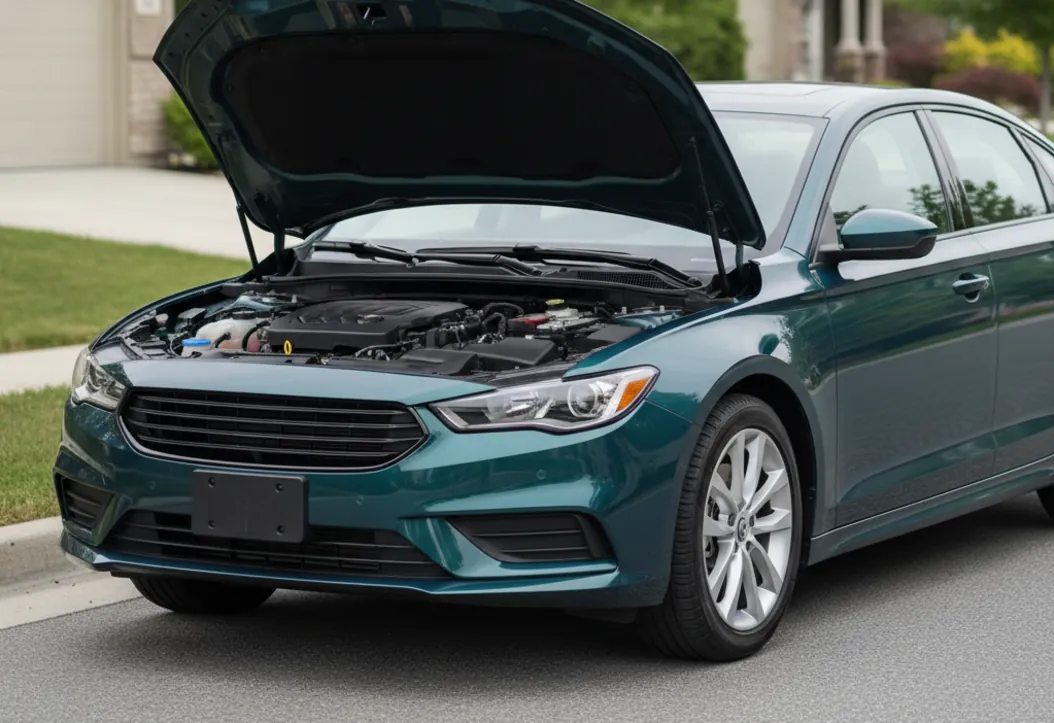
How to Check for Recalls
The fastest way to check if your vehicle has an open recall is through the NHTSA's official VIN lookup tool. Simply enter your 17-character Vehicle Identification Number (VIN) to see any open recalls associated with your vehicle.
If your car is part of a recall, the manufacturer must fix the issue at no charge to you. Typically, you'll receive an official recall notice in the mail or via email explaining the defect, the risks, and instructions on getting it repaired.
If you do find a recall on your car, don't ignore it. The repair will cost you nothing and could prevent accidents or injuries. Addressing a recall promptly is not just about avoiding inconvenience — it's about preventing potential crashes and staying safe on the road.
Check Your Vehicle for Open Recalls
Enter your 17-character VIN to instantly check for open safety recalls reported to the NHTSA.
Find your VIN on the dashboard near the windshield or inside the driver door jamb. We never store your VIN.
Recall data comes from the U.S. National Highway Traffic Safety Administration (NHTSA). You can also search directly at NHTSA.gov.
Recall Compensation and Lemon Law
State Lemon Laws like California's Song-Beverly Consumer Warranty Act provide another layer of consumer protection. A recall by itself is a broad safety action, but a "lemon" is a specific vehicle that has chronic issues.
California's Lemon Law protects you if your car has a substantial defect that the manufacturer can't fix after a reasonable number of attempts. In such cases, you could be entitled to a buyback or replacement vehicle.
When a recall repair isn't enough, Lemon Law attorneys step in to help you get a replacement or refund for your defective vehicle. If you suspect your car is a "lemon" — meaning it has a defect that remains unfixed after reasonable repair attempts — you may be entitled to more than just another repair.
What Compensation Can You Receive?
Here are the typical outcomes a Lemon Law attorney can help you pursue if your vehicle qualifies:
Free Repair
Manufacturers must fix recall-related defects at no cost to you.
Replacement Vehicle
If the defect can't be fixed, you may receive a comparable replacement vehicle.
Refund / Buyback
Get a full refund of your purchase price, including loan balance and related costs.
Cash Compensation
Negotiate a cash settlement to compensate for the trouble and expenses you've incurred.
The exact compensation depends on your state's law and your specific case. California's Lemon Law may also require the manufacturer to pay off your loan balance and cover your attorney's fees and costs if you win the case.
When a Recall Becomes a Lemon Law Case
Most recall issues are resolved with a single free fix. But sometimes, owners find themselves going back to the dealer again and again, or dealing with related problems that just won't go away.
If your vehicle's recall has turned into a recurring nightmare of repairs, you don't have to just accept it. California's Lemon Law — one of the strongest in the nation — provides for compensation or other remedies to make sure you're not stuck with an unsafe, unreliable vehicle.
Navigating this process can feel overwhelming — that's where our experienced Lemon Law attorneys come in. Manufacturers have legal teams working to minimize what they pay, so having your own legal advocate levels the playing field.
Repeated Repairs
If the same defect persists after multiple repair attempts, your vehicle may qualify as a lemon.
Safety Concerns
Severe safety defects may require fewer repair attempts before qualifying for Lemon Law protections.
Extended Downtime
If your car has been out of service for 30+ days due to warranty repairs, you may have a claim.
Is Your Recalled Vehicle a Lemon?
If your vehicle's recall has turned into a recurring nightmare of repairs, you don't have to just accept it. Our experienced Lemon Law attorneys can help you determine if your vehicle qualifies for a refund, replacement, or cash compensation.
We encourage you to check if your vehicle is affected by any recalls. If you're experiencing persistent issues, contact our firm to find out if your vehicle might be a lemon.
Types of Recalls and the Repair Process
Not every recall looks the same. Some address a single faulty part — a seatbelt buckle that can release, a fuel line that leaks, a backup camera that goes dark. Others cover a software flaw that the dealer can update in under an hour. The most serious are safety recalls tied to defects that can cause a crash, fire, or injury, which is why airbag inflators, brakes, steering, and fuel systems show up so often in NHTSA notices.
There are also compliance recalls, issued when a vehicle or piece of equipment doesn't meet a Federal Motor Vehicle Safety Standard even if no failure has happened yet, and equipment recalls that cover tires, child seats, and aftermarket parts rather than the car itself. Knowing which type you're dealing with helps you understand how urgent the repair is and what the manufacturer owes you.
The repair process is meant to be simple. Once a recall is announced, the manufacturer mails a notice to every registered owner describing the defect, the risk, and how to schedule a free fix at an authorized dealer. You bring the car in, the dealer performs the remedy at no cost, and you drive away. By federal law the remedy — repair, replacement of the part, or in rare cases a refund — is always free, and there is no expiration on a safety recall remedy for most passenger vehicles.
Your rights during this process are real. You're entitled to written notice, a free correction, and a loaner or reimbursement in some cases if the dealer can't get the part right away. If a dealer tries to charge you for a recall repair or stalls for an unreasonable amount of time, that's a problem worth documenting.
Timing matters too. After a recall is announced, manufacturers usually send owner notification letters within 60 days, though the remedy itself can take longer if a redesigned part has to be produced. A recall is also a different thing from a lemon. A recall is a broad action covering every vehicle in a build range with a known defect; a lemon is your specific car, with a defect that hasn't been fixed despite repeated tries. One recall doesn't make a car a lemon, but a recall you keep returning for can be the start of a Lemon Law claim.
What to Do If a Recall Repair Fails
Most recalls end with one visit. But some owners keep coming back for the same problem, or a recall repair fixes one issue and leaves the car running worse than before. When a defect keeps returning after the dealer has had a fair chance to correct it, you may be looking at more than a recall — you may have a lemon.
California's Song-Beverly Consumer Warranty Act, the formal name for the state's Lemon Law, steps in here. It applies to new and many used vehicles still covered by a manufacturer's warranty, including leased cars. The law doesn't ask you to prove the manufacturer acted in bad faith. It asks a simpler question: did the manufacturer or its authorized dealers fail to repair a substantial defect after a reasonable number of attempts?
A "reasonable number" depends on the defect. As a general guide, four repair attempts for the same problem, or two attempts for a defect that could cause serious injury or death, can be enough to trigger the law's protections. So can a vehicle that has been out of service for repairs for a cumulative total of more than 30 days. A recall that sends you back to the dealer again and again can satisfy these thresholds.
It also helps to know what makes a recall escalate into a claim. The defect has to be substantial — something that affects the use, value, or safety of the car, not a minor squeak or trim rattle. A brake recall that doesn't hold, a steering fault that returns, or an electrical defect that strands you on the road are the kinds of problems courts and manufacturers take seriously. When the same safety defect survives multiple authorized repairs, the case for a buyback gets stronger with every visit.
If your car qualifies, Song-Beverly entitles you to a buyback or a replacement vehicle. A buyback typically returns your down payment, your monthly payments, and your remaining loan balance, plus incidental costs like towing and rental cars — reduced only by a statutory mileage offset for the miles you drove before the first repair attempt. The same offset applies if you choose a comparable replacement instead. The law also shifts attorney's fees and costs onto the manufacturer when you win, which is why working with a lawyer usually costs you nothing out of pocket.
Keep your paperwork. Repair orders, recall notices, and a simple log of dates and symptoms are the backbone of a strong claim. If you think a recall has turned into a recurring problem, you can review the California Lemon Law, learn what a car recall is in more detail, or estimate a payout with our Lemon Law buyback calculator. Buyers of used cars can read about a Lemon Law lawyer for used cars.
Recall and Lemon Law FAQ
How do I know if my vehicle qualifies as a lemon?
Your vehicle may qualify under the California Lemon Law if the manufacturer's authorized dealers have been unable to repair a substantial defect after a reasonable number of attempts while the car was under warranty.
What counts as a reasonable number of repair attempts?
It depends on the defect. The Lemon Law generally points to four attempts for most problems and two for a serious safety defect, judged case by case against how severe the issue is. The standard can also be met if the vehicle sits at the repair facility for more than 30 days total, no matter how many attempts that took.
Can my vehicle qualify if it's leased or used?
Yes. A leased or used vehicle can qualify under the California Lemon Law as long as the repair attempts were made while the manufacturer's warranty was still in effect. A free case evaluation is the fastest way to find out where you stand.
What am I entitled to under the California Lemon Law?
A buyback returns your down payment, monthly payments, and full loan payoff, and can also cover repair, towing, and rental costs. You can choose a comparable replacement vehicle instead. The manufacturer is allowed a mileage offset for the distance driven before the first repair attempt, which applies to either a repurchase or a replacement. Our buyback calculator gives you a rough estimate.
Do I have to pay anything up front?
No. The Lemon Law's fee-shifting provision requires the manufacturer to pay a winning consumer's reasonable attorney's fees and costs, so you can pursue a claim without legal fees standing in your way.
Does the Lemon Law apply to used cars with no warranty?
Usually not on its own, but you may still have a claim. If a dealer committed fraud or negligence in the sale, our attorneys may be able to take action against the dealership even without a manufacturer warranty. See our used car resources for more.
How do I check whether my vehicle has an open recall?
Look it up by VIN on the NHTSA database or with a franchised dealer for your make. Recalls are issued by model year and VIN rather than by model as a whole.
Does a recall repair cost me anything?
No. A safety recall repair is free regardless of who owns the vehicle, how old it is, or whether you were the original buyer. That obligation sits with the manufacturer and does not expire in the way a warranty does.
What if the dealer cannot fix the recall?
A recall repair that keeps failing after repeated attempts can support a California lemon law claim, because the underlying defect persists despite the manufacturer having had its chances. Keep the repair order from each recall visit, since those count towards the attempt total.
Does an open recall stop me selling the car?
A private seller can generally sell a used vehicle with an open recall, though dealers face stricter rules on new cars. Disclosing it is the safer course, and the buyer can have the recall work done free at a franchised dealer afterwards.
California has some of the strongest consumer protection laws in the country, which matters most when a new car — one of the largest purchases many people make — keeps breaking down. If a recall has turned into a pattern, you have rights, and you don't have to enforce them alone.
Don't Let a Defective Car
Cost You Another Day.
Every day you wait is a day the manufacturer wins. Take 60 seconds to find out if your vehicle qualifies, it's free, confidential, and could change everything.