California Lemon Law for Electric Vehicles

Electric vehicles represent the future of driving, but they're not without problems. From battery degradation to software failures, EVs can develop defects just like traditional vehicles. California lemon law fully covers electric vehicles, and The Lemon Pros has extensive experience with EV claims.

EVs and the California Lemon Law at a Glance

California lemon law covers electric vehicles under the Song-Beverly Consumer Warranty Act. If your EV has a substantial defect the manufacturer cannot fix within a reasonable number of attempts while it is under warranty, you may be owed a buyback, a replacement, or a cash settlement.

Who Qualifies

owners and lessees of new or used EVs still covered by a manufacturer's warranty, including Tesla, Rivian, Lucid, and plug-in hybrids.

Repair Thresholds

generally four or more repair attempts for the same defect, two or more for a serious safety defect, or 30 or more cumulative days out of service.

What You Can Recover

a buyback (purchase price refund minus a mileage offset), a comparable replacement vehicle, or cash to keep the car.

Cost to You

nothing out of pocket. The Act's fee-shifting provision makes the manufacturer pay your attorney fees when you win.

Good to Know

the high-voltage battery and drivetrain often carry an 8-year or 100,000-mile warranty, giving you a longer window to raise a battery or drive-unit defect. Note that after the 2024 Rodriguez v. FCA decision, a used EV carrying only the balance of a factory warranty generally no longer qualifies for a buyback or replacement, though a certified pre-owned EV with its own new warranty may, and damages and fees can still be on the table.

What Qualifies?

  • Tesla (Model S, Model 3, Model X, Model Y, Cybertruck)
  • Rivian (R1T, R1S)
  • Lucid Air
  • All other electric vehicles under warranty
  • Plug-in hybrid vehicles (PHEV)

Common Defects

Battery degradation and range loss

Charging system failures

Electric motor problems

Software and OTA update issues

Autopilot/ADAS malfunctions

Touchscreen and infotainment failures

Build quality issues (panel gaps paint)

Suspension and drivetrain noises

EVs covered by California lemon law

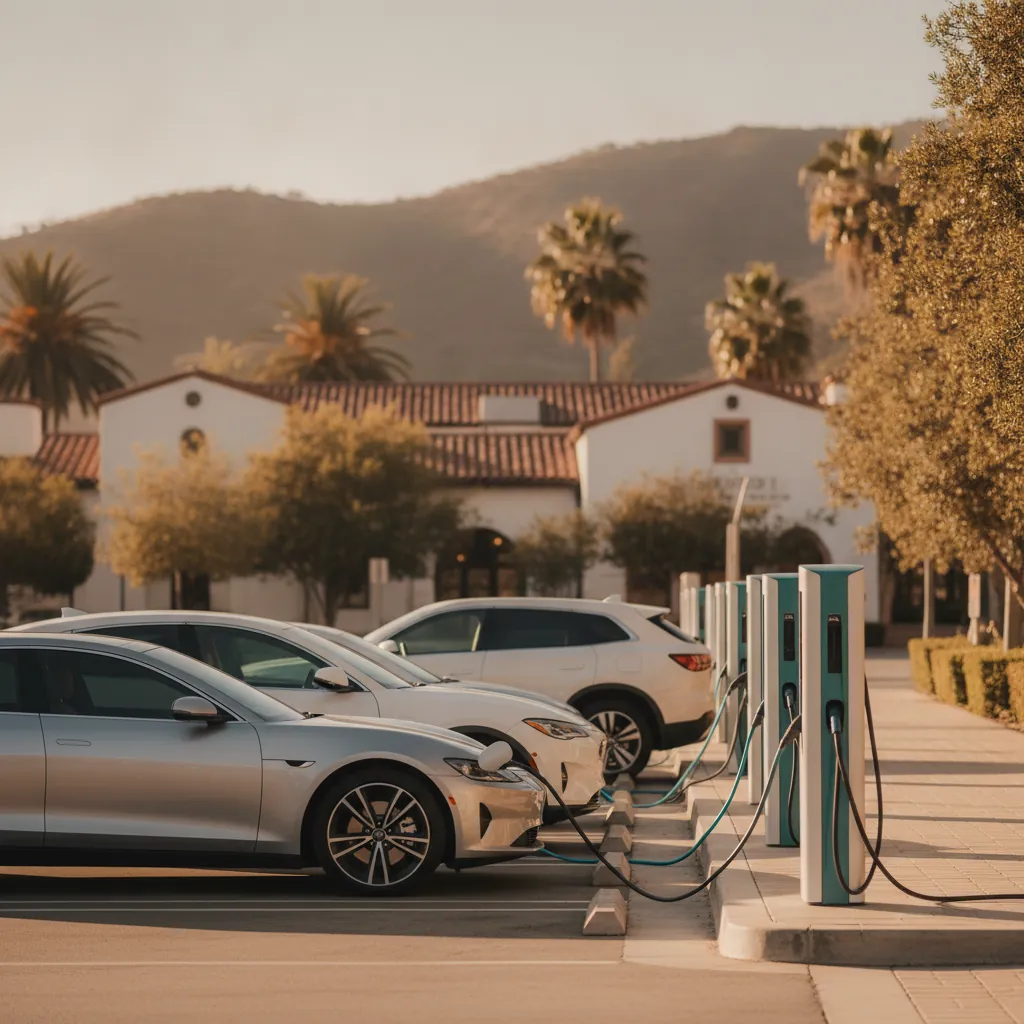
California lemon law protection for owners of defective evs.

Does California Lemon Law Cover Electric Vehicles?

It does. California's Song-Beverly Consumer Warranty Act applies to EVs and plug-in hybrids just like gas vehicles, Tesla, Rivian, Lucid, and every EV from a legacy automaker included. EV-specific components like the high-voltage battery, drive units, and onboard software are all covered when they fail under the manufacturer's warranty.

The defect must substantially affect the vehicle's use, value, or safety, and the manufacturer must have had a reasonable number of repair attempts, or the car must have been out of service for 30+ cumulative days. Many EV batteries carry an 8-year/100,000-mile warranty, which gives you a long window to assert your rights.

Common EV Defects We See

Electric vehicles trade some old problems for new ones. These are the defects that most often support a lemon law claim.

Battery & Range Loss

Rapid range degradation, cells that won't hold a charge, thermal-management faults, and battery defects that trigger recalls or stop-drive warnings.

Charging Failures

Vehicles that won't accept a charge, onboard-charger faults, charge-port failures, and DC fast-charging that cuts out or never completes.

Software & Drive Unit

Buggy over-the-air updates, frozen touchscreens that disable controls, phantom braking, and drive-unit or motor failures that sap power.

If your EV has been back for the same issue more than once or sat waiting on parts, keep your records and get a free case review, we'll take it from there.

Battery Warranties and the EV Mileage Offset

Electric vehicles are covered by the lemon law the same way gas cars are, but the defects and the warranty math both look different. The high-voltage battery and drive unit usually carry their own coverage, often 8 years or 100,000 miles, separate from the shorter bumper-to-bumper warranty on the rest of the car. That longer window matters. A battery or drive-unit defect first reported while the battery warranty is still active can support a claim even after bumper-to-bumper coverage has lapsed, so the date you first complained is what to pin down.

The mileage offset works a little differently on an EV, too. When a manufacturer buys a vehicle back, it subtracts an offset for the miles you drove before the first repair attempt for the defect, calculated against a statutory 120,000-mile useful-life figure. On an EV the sticker price is often higher and, on a battery claim, the failing component is the single most expensive part of the car, so the pre-repair mileage that drives that offset is worth documenting precisely. The offset is tied to when the problem first appeared, not to today's odometer.

EV-specific failures cluster around the electric powertrain. Battery capacity and range loss beyond normal degradation, cells that will not hold a charge, and thermal-management faults are the headline ones. Charging problems, onboard-charger faults, charge-port failures, and DC fast-charging that cuts out or never completes, strand a car just as surely as a dead engine. Then there is the software layer that is unique to these cars: buggy over-the-air updates, frozen touchscreens that disable climate or drive controls, and glitchy regenerative or one-pedal behavior. Drive-unit and motor failures round it out.

Battery defects have also driven some of the largest EV recalls on record, which is useful context because a recall that does not fix the problem can feed a lemon claim. Two verified examples: the Chevrolet Bolt battery-fire recall, NHTSA campaign 21V560, covered 2017 to 2019 Bolt EVs over LG battery cells that could catch fire, and General Motors later expanded coverage to all 2017 to 2022 Bolt vehicles under NHTSA 21V650. Separately, Hyundai recalled 2019 to 2020 Kona Electric and 2020 Ioniq Electric vehicles under NHTSA 21V-127 for a battery-cell fire risk, again tied to LG cells. If your model was part of a battery recall and the fix left you with reduced range, repeated stop-drive warnings, or a car that keeps going back, that history belongs in your file. You can verify any recall by VIN at nhtsa.gov. Owners of a defective Bolt can read more on our Chevrolet Bolt page, and Tesla drivers can start with our Tesla lemon law page.

Electric Vehicle Lemon Law Questions

Common questions about California lemon law for Tesla, Rivian, Lucid, and other EVs. For a full breakdown, see our used-car lemon law guide or estimate your claim with the buyback calculator.

Yes. The Song-Beverly Consumer Warranty Act covers electric vehicles the same way it covers gas cars. If your EV has a defect that substantially affects its use, value, or safety and the manufacturer cannot repair it within a reasonable number of attempts while it is under warranty, it can qualify. The guideline is generally four or more repair attempts for the same substantial defect, two or more for a serious safety defect, or 30 or more cumulative days out of service waiting on repairs. This applies to Tesla, Rivian, Lucid, plug-in hybrids, and EVs from legacy automakers.
Electric vehicles bring their own failure points. The ones we see most often involve the high-voltage battery (rapid range loss, cells that will not hold a charge, thermal-management faults, stop-drive warnings), the charging system (onboard-charger faults, charge-port failures, DC fast-charging that cuts out), the drive units or electric motors, and the software (buggy over-the-air updates, frozen touchscreens that disable controls, phantom braking). Any of these can qualify if the defect is substantial and the manufacturer cannot fix it under warranty.
What matters is whether the defect was reported while the vehicle was still under the manufacturer's warranty. EVs often carry two relevant warranties: a bumper-to-bumper warranty covering the whole car and a separate battery and drivetrain warranty, frequently 8 years or 100,000 miles. That longer battery warranty gives you an extended window to raise a high-voltage battery or drive-unit problem. Even if your bumper-to-bumper coverage has expired, a battery defect first reported during the battery warranty period may still support a claim.
Keep every repair order, service invoice, and dealer communication, and make sure each visit is documented in writing even when the dealer says nothing was found. Note any days your vehicle sat at the service center waiting on parts, which is common with EV components. Report defects to the manufacturer or authorized dealer, not just a third-party shop, so the attempts count toward your claim. Then request a free case review and we will assess whether the repair history meets the Song-Beverly standard.
If your EV qualifies, you may be entitled to a buyback (a refund of your purchase price, payments, and down payment, less a mileage offset), a replacement vehicle of comparable value, or a cash settlement that lets you keep the car. You can also recover incidental costs such as towing, rental, and charging-related expenses. Under the Act's fee-shifting provision, the manufacturer pays your attorney fees and costs when your case succeeds, so representation costs you nothing out of pocket.
It depends, and the rules for used EVs changed after the California Supreme Court's 2024 Rodriguez v. FCA decision. A used EV sold with only the remaining balance of the manufacturer's original warranty generally no longer qualifies for a buyback or replacement. A certified pre-owned EV sold with its own new warranty may still qualify. Even when a refund-or-replace remedy is off the table, used-EV owners can often still recover money damages and attorney fees. The Song-Beverly Act also reaches other electric consumer goods sold with a warranty, including electric motorcycles, boats, and the chassis and components of motorhomes, though coverage depends on the specific warranty and how the product is used. If you are unsure whether your purchase qualifies, ask us and we will review the paperwork and tell you which remedies apply.

4.7 from 97 Google reviews

Read our Google reviews
C

Carlos Maldonado

a week ago

The Lemon pros Worked with me During a time, I’m in my life, where I was going through a lot of transitions. They were professional, and very patient as I was not always disposable or able to find paperwork for my claim. It was not overnight, but when the day came for The Lemon pros to negotiate my settlement, It was a glorious outcome. I Told the Lemon pros get me at least $10,000 and I’ll be Happy, And what did they do? They hit the ball out of the park!!!! and got me a settlement of $17,500!!!! And I got The Check without amount to prove it!!! Thanks, Lemon pros!!!!!

M

Merooge Keshishian

4 months ago

I highly recommend The Lemon Pros to any Tesla owner with a lemon. They are experts in Tesla cases and truly fight for their clients' rights. I also thank the team (Tony, Sella, Zulma) for their incredible work on my lemon law case. The team was incredibly responsive, kept me updated every step of the way, and made the entire process smooth and stress-free. They handled all communication with Tesla, freeing me from the frustration.

L

Lauren Tucay

6 months ago

I had an excellent experience with The Lemon Pros, specifically Tony and Suzy B. Both were incredibly helpful throughout the entire process and always kept me well-informed. They made everything smooth and stress-free, which I truly appreciated. Their professionalism, communication, and care really stand out. I highly recommend their services to anyone in need of support with a lemon law case.

R

Robert A. Ruiz, III

6 months ago

I couldn’t be more grateful for the outstanding team at The Lemon Pros. Their team was fantastic from start to finish, always responsive, professional, and committed to keeping me informed every step of the way. Their follow-through was exceptional and their determination truly made a difference in achieving a positive outcome in my case. I’m so glad I chose them to represent me and I highly recommend their services to anyone seeking a dedicated and reliable team.

Don't Let a Defective Car
Cost You Another Day.

Every day you wait is a day the manufacturer wins. Take 60 seconds to find out if your vehicle qualifies, it's free, confidential, and could change everything.