California Hyundai Lemon Law Attorney

Hyundai has aggressively expanded its presence in the California market with competitive pricing and long warranties, but beneath the appealing packages lie serious quality and safety concerns.

Think Your Car Might Be a Lemon?

Find out in 60 seconds. Free case review, no upfront cost, and you only pay if we win.

Your Hyundai Lemon Law Rights at a Glance

If your Hyundai has a warranty-covered defect the dealer cannot fix after a reasonable number of tries, California's lemon law can force Hyundai to buy it back, replace it, or pay you a cash settlement. The Lemon Pros handle these cases at no cost to you, because the manufacturer pays your attorney fees when you win.

Who Qualifies

You likely qualify if your Hyundai had four or more repair visits for the same problem, two or more for a serious safety defect, or 30 or more cumulative days in the shop, all while under the factory warranty.

Repair Thresholds

Recovery options include a full buyback (down payment, monthly payments, taxes, and fees, minus a mileage offset), a comparable replacement Hyundai, or a cash-and-keep settlement.

What You Can Recover

You pay nothing out of pocket. California's fee-shifting rule sends your attorney fees and costs to Hyundai when your claim succeeds.

Cost to You

5 years or 60,000 miles basic and 10 years or 100,000 miles powertrain for the original owner, so engine and transmission failures that surface years later can still anchor a claim.

Good to Know

Used-car rules tightened after the 2024 Rodriguez v. FCA decision, so a pre-owned Hyundai sold with only the balance of the factory warranty usually no longer qualifies for a buyback, though a certified pre-owned Hyundai with its own new warranty still can.

Hyundai has aggressively expanded its presence in the California market with competitive pricing and long warranties, but beneath the appealing packages lie serious quality and safety concerns. The Theta II engine crisis, which has led to millions of vehicles being recalled for catastrophic engine failure and fire risk, represents one of the largest automotive safety scandals in recent memory. Combined with persistent dual-clutch transmission problems, GDI engine issues, and electrical system failures, Hyundai vehicles have produced an enormous number of lemon law claims under California's Song-Beverly Consumer Warranty Act.

The Lemon Pros have represented thousands of Hyundai owners in California who have been let down by vehicles that should never have left the factory. Whether your Hyundai's engine seized without warning or your transmission shudders every time you pull away from a stop, our experienced lemon law attorneys will fight to get you the full compensation you are entitled to. California's lemon law is powerful, and with the right legal team, you can hold Hyundai accountable.

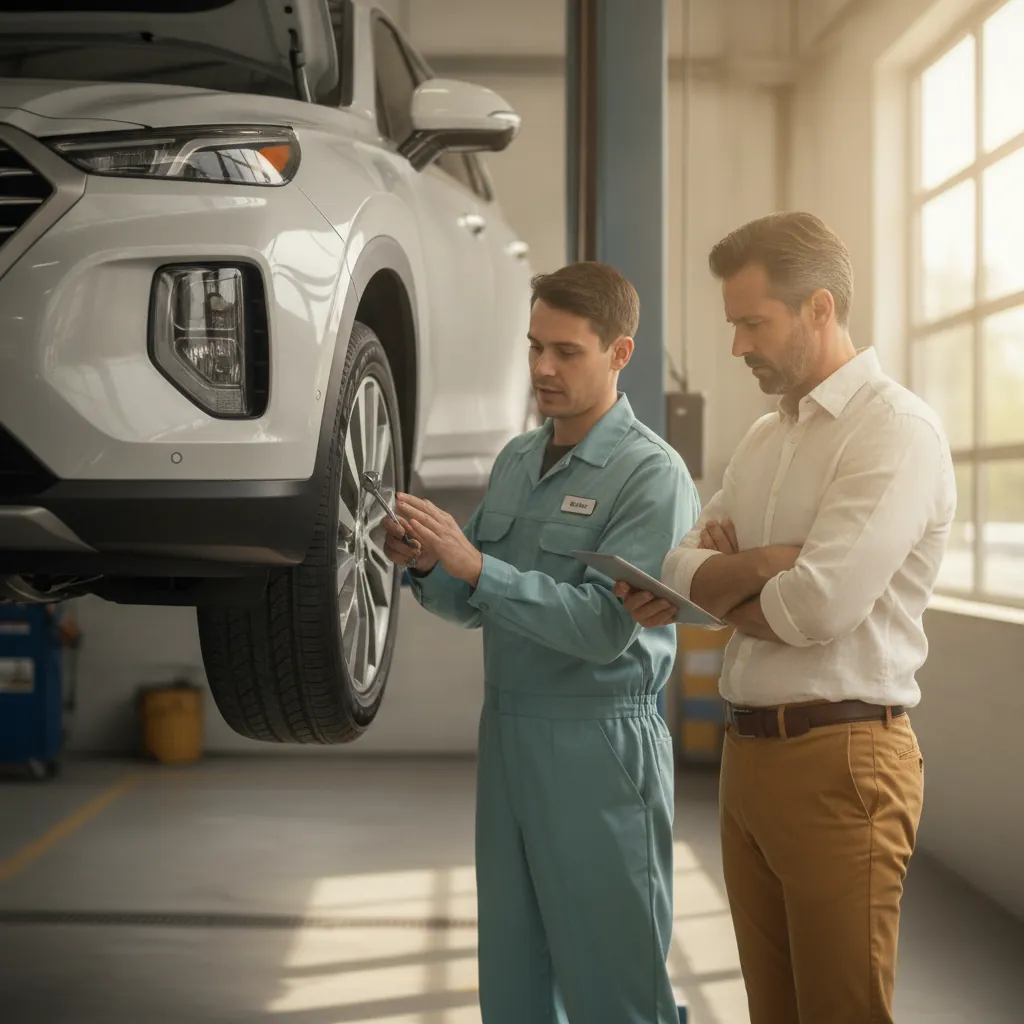
Hyundai vehicle at a California service center, representing The Lemon Pros Hyundai lemon law help

Helping California Hyundai owners hold manufacturers accountable for defects.

Common Hyundai Defects Covered by California Lemon Law

Hyundai vehicles have developed several alarming defect patterns that have generated large volumes of lemon law claims in California. Knowing the most common problems can help you determine if your Hyundai qualifies.

Theta II Engine Failures and Fire Risk: The Theta II engine, found in millions of Hyundai Sonatas, Santa Fes, and Tucsons, has been subject to massive recalls due to manufacturing defects that can cause connecting rod bearing failure, engine seizure, and vehicle fires. Metal debris from the manufacturing process can restrict oil flow, leading to catastrophic engine failure often with little or no warning. This is one of the most dangerous automotive defects in recent history and is an extremely strong basis for a lemon law claim.

Dual-Clutch Transmission (DCT) Problems: Hyundai's 7-speed dual-clutch transmission, used in models like the Tucson, Veloster, and Elantra, has been widely criticized for shuddering, hesitation from a stop, rough shifting, unexpected loss of power during acceleration, and complete transmission failure. NHTSA has investigated these transmissions, and Hyundai has issued multiple recalls and technical service bulletins. The safety implications of sudden power loss during highway driving make DCT defects particularly compelling lemon law claims.

GDI (Gasoline Direct Injection) Engine Issues: Hyundai's GDI engines have experienced problems including excessive carbon buildup on intake valves, rough idling, misfiring, poor fuel economy, and premature engine wear. These issues can be difficult and expensive to address and often recur after cleaning procedures.

Electrical System Failures: Hyundai vehicles are prone to a range of electrical defects, including short circuits, battery drain, alternator failures, malfunctioning electronic control units, and wiring harness problems. These electrical issues can affect everything from the engine and transmission to lights, windows, and safety systems.

Paint and Body Defects: Hyundai has faced complaints about paint peeling, bubbling, and fading prematurely, particularly on white and light-colored vehicles. While individual paint defects may not always meet the lemon law threshold, widespread or severe paint failures that substantially diminish the vehicle's value can qualify, especially when the manufacturer fails to provide an adequate repair.

Steering System Defects: Some Hyundai models have experienced electric power steering failures, including loss of power assist, steering wheel vibration, and off-center steering. Steering defects are inherently safety-related and require fewer repair attempts to establish a lemon law claim in California.

Fuel System and Emissions Issues: Hyundai vehicles have been reported to have fuel pump failures, fuel injector problems, and emissions control system malfunctions that trigger persistent check engine lights. These defects can affect vehicle performance and may cause the vehicle to fail California's smog inspection requirements.

ADAS and SmartSense Malfunctions: Hyundai's SmartSense suite of advanced driver assistance features has been reported to malfunction, including false forward collision warnings, phantom emergency braking, lane keep assist pulling the vehicle inappropriately, and blind spot monitoring failures. These safety technology malfunctions can be dangerous and are strong grounds for lemon law claims.

How the California Lemon Law Applies to Your Hyundai

California's Song-Beverly Consumer Warranty Act provides some of the strongest consumer protections in the nation, and Hyundai owners can use this law to hold the manufacturer accountable for defective vehicles. Here is how the law applies to your Hyundai.

Your Hyundai must have a substantial defect that impairs its use, value, or safety. Given the severity of defects commonly found in Hyundai vehicles, including engine seizure, transmission failure, and fire risk, most Hyundai owners with recurring problems will meet this threshold. Even less dramatic defects like persistent infotainment failures or electrical glitches can qualify if they meaningfully impact your ability to use or enjoy your vehicle.

Hyundai must have had a reasonable number of repair attempts to fix the defect. California law creates a presumption that a vehicle is a lemon after four or more repair attempts for the same issue, two or more attempts for a safety defect that could cause death or serious injury, or 30 or more cumulative days out of service. Given that engine failure and fire risk are life-threatening safety defects, as few as two repair attempts for these issues may be sufficient to establish your claim.

The defect must have first appeared during the warranty period . Hyundai offers one of the industry's longest warranties: 5 years/60,000 miles for the basic warranty and 10 years/100,000 miles for the powertrain on vehicles sold to the original owner. This extended warranty means that Hyundai owners have a longer window to bring lemon law claims for powertrain-related defects like engine and transmission failures.

The defect must not be attributable to owner abuse, neglect, or unauthorized modifications.

Think Your Hyundai May Be a Lemon?

Get a free case evaluation from California's top-rated lemon law attorneys. No fees unless we win.

Free Case Review Call (855) 659-1784

What Compensation Can You Get for a Defective Hyundai?

When your Hyundai qualifies as a lemon under California law, you have several compensation options designed to make you whole after your experience with a defective vehicle.

Vehicle Buyback: Hyundai must repurchase your vehicle and refund the complete purchase price, including your down payment, all payments made, taxes, registration fees, and incidental costs such as towing, rental car expenses, and repair-related costs. A reasonable mileage offset is deducted based on the miles driven before the first repair attempt for the qualifying defect.

Replacement Vehicle: You may choose to receive a new, comparable Hyundai to replace your defective vehicle, with the manufacturer covering the full cost of the replacement.

Cash-and-Keep Settlement: If you prefer to keep your Hyundai, you can negotiate a cash payment that compensates you for the vehicle's diminished value and the ongoing inconvenience of the defect.

Civil Penalty Up to 2x Damages: If Hyundai willfully failed to comply with California lemon law, such as by refusing a valid buyback request or deliberately delaying the process, the court may award a civil penalty of up to two times your actual damages. Given Hyundai's documented pattern of initially denying valid claims, this penalty is pursued in many cases.

Attorney Fees Paid by Hyundai: Under California lemon law, the manufacturer pays your attorney fees when you win. Hiring The Lemon Pros costs you absolutely nothing out of pocket.

Hyundai Models with the Most Lemon Law Claims

Several Hyundai models have generated disproportionately high numbers of lemon law claims in California due to recurring defect patterns.

Hyundai Sonata: The Sonata, particularly models equipped with the Theta II engine, has been one of the most frequently claimed Hyundai models. Engine failure, engine fires, and transmission problems are the primary bases for claims. Electrical issues and infotainment malfunctions are also commonly reported.

Hyundai Tucson: The Tucson has generated claims related to both the Theta II engine and the problematic 7-speed dual-clutch transmission. Owners report engine seizure, transmission shuddering and hesitation, electrical problems, and SmartSense safety system malfunctions.

Hyundai Elantra: The Elantra has been the subject of lemon law claims involving its dual-clutch transmission, electrical system failures, steering problems, and infotainment defects. The compact sedan's affordable price point makes it popular among first-time car buyers who may not realize they have lemon law rights.

Hyundai Santa Fe: The Santa Fe has experienced Theta II engine issues, transmission problems, electrical failures, and ADAS malfunctions. As a family SUV, safety-related defects in the Santa Fe are particularly concerning and strengthen lemon law claims.

Hyundai Kona/Kona Electric: The Kona Electric was subject to a battery fire recall similar to the Chevrolet Bolt, while the gasoline Kona has experienced DCT transmission issues, engine problems, and electrical defects. The Kona Electric recall and associated safety concerns have generated numerous lemon law claims.

Why Choose The Lemon Pros for Your Hyundai Lemon Law Case?

Holding Hyundai accountable for defective vehicles requires aggressive legal representation from attorneys who understand the specific challenges involved. The Lemon Pros are uniquely qualified to handle your Hyundai lemon law case.

Thousands of Cases, Proven Results: The Lemon Pros have successfully handled thousands of California lemon law cases, including extensive experience with Hyundai claims. We know Hyundai's defense strategies and how to overcome them.

No Win, No Fee, Guaranteed: You pay nothing out of pocket, ever. California lemon law requires Hyundai to pay your attorney fees when we prevail. There is absolutely zero financial risk to you.

Deep Hyundai Knowledge: Our team maintains current knowledge of all Hyundai recalls, technical service bulletins, NHTSA investigations, and class action lawsuits. This brand-specific expertise gives your case a significant advantage.

Compassionate, Responsive Service: We understand that dealing with a dangerous defective vehicle is stressful and frightening, especially when engine fires are a possibility. Our team provides responsive, compassionate service throughout your case while fighting aggressively for your rights.

Efficient Case Resolution: Most of our Hyundai lemon law cases resolve within 60 to 90 days. We work diligently to get you compensated and into a safe, reliable vehicle as quickly as possible.

The Records That Carry the Weight in a Hyundai Claim

A Hyundai case lives or dies on paperwork, and most of it sits in a folder you already control. The single most valuable document is the repair order. Every time you bring your Sonata, Tucson, or Elantra to an authorized Hyundai service department, the advisor generates an order that lists your complaint, the technician's findings, the parts touched, and the dates the car went in and came out. Those dates are what the Song-Beverly Act counts. Four orders for the same complaint, two for a safety problem like sudden power loss, or 30 cumulative days off the road, and the law presumes the car is a lemon. Ask for a printed copy at every visit, and read it before you leave the counter. Service writers sometimes log a different complaint than the one you described, or write "could not duplicate" when you clearly felt the transmission shudder on the drive over. If the order does not match what you reported, say so and have it corrected on the spot.

Keep more than the orders. Hold onto the original purchase or lease contract, the window sticker, the Hyundai warranty booklet, and every recall or technical service bulletin notice the manufacturer mails you. Those letters matter because Hyundai sends them when it already knows a component has a known failure pattern, which undercuts any later argument that your problem was a one-off. Save your own notes too. A short log with the date, the mileage, what the car did, and who you spoke with turns a vague memory into a timeline a court can follow. Photos and short videos help when a defect is intermittent: a dash full of warning lights, a frozen infotainment screen, or smoke from the engine bay is far more persuasive on video than in a sentence. The owner who keeps a tidy file rarely has to argue about whether the repair attempts happened. If you want to see how these protections read in the statute, our California lemon law overview walks through the Song-Beverly basics in plain language.

How the Hyundai Warranty Sets the Boundaries of Your Case

Hyundai's coverage is longer than most, and that length works in your favor under California law. The basic bumper-to-bumper warranty runs five years or 60,000 miles, and the powertrain warranty stretches to ten years or 100,000 miles for the original owner. The detail people miss is the timing rule. Song-Beverly cares about when the defect first showed up, not when the dealer finally diagnosed or repaired it. If your engine started knocking or your dual-clutch transmission began hesitating while the car was still inside the warranty term, you remain protected even if the repair attempts drag on past the mileage limit. Because Hyundai's powertrain term is so generous, an engine or transmission failure that surfaces years into ownership can still anchor a strong claim long after a shorter warranty would have closed the door.

The transferred warranty is where used Hyundai buyers need to pay attention. When a Hyundai changes hands, the original ten-year powertrain coverage shortens for the second owner, while the five-year basic term carries over for its remaining time. That distinction matters more after the 2024 Rodriguez v. FCA decision, which narrowed used-car protections. A used Hyundai sold with only the remaining balance of the factory warranty generally no longer qualifies for a buyback or a replacement, though a certified pre-owned Hyundai sold with its own new warranty still can, and used-car owners can often recover money damages and attorney fees even when a full refund is off the table. We review each used-car claim to see which remedies actually apply. The dealer who tells a used-car owner that lemon law only protects new vehicles is wrong, and that misstatement has cost plenty of Hyundai drivers a recovery they were owed. Our guide for the used-car lemon law covers how the transferred warranty plays out in practice.

What the Road to a Hyundai Buyback Actually Looks Like

Owners often picture a lemon law case as a courtroom fight, but the path is usually quieter than that. It starts the moment your repair orders cross the Song-Beverly threshold. With the file in hand, we send Hyundai a demand that lays out the defect, the repair history, and the remedy you want, whether that is a buyback, a comparable replacement, or a cash settlement that lets you keep the car. Most manufacturers respond to a documented demand rather than risk a trial they are likely to lose.

If Hyundai agrees to repurchase, the refund covers far more than the sticker price. You recover your down payment, every monthly payment made, sales tax, registration, and incidental costs like towing and rental cars, reduced only by a mileage offset for the distance you drove before the first repair visit for the qualifying defect. That offset is calculated from a statutory formula, not whatever number the manufacturer would prefer, and it is one of the places a Hyundai owner without representation tends to leave money behind. Should Hyundai stall or deny a claim it should plainly honor, California's civil penalty allows up to two times your damages, which gives the manufacturer a strong reason to deal fairly. And because the law shifts attorney fees onto the manufacturer when you prevail, the entire process costs you nothing out of pocket. You can check the math on a refund yourself with our buyback calculator before you ever pick up the phone.

Hyundai Lemon Law Questions, Answered

Most likely yes if the same defect keeps coming back and the dealer cannot fix it. California's Song-Beverly Act covers any Hyundai still under the factory warranty when the problem first showed up. The law assumes your car is a lemon after four repair visits for the same issue, two visits for a safety problem like an engine fire or sudden power loss, or 30 total days in the shop. Theta II engine trouble, DCT shudder, and electrical faults are the defects we see qualify most often.
Four categories drive the bulk of Hyundai cases we handle. The Theta II engine has a history of connecting rod bearing failure that can seize the motor or start a fire. The 7-speed dual-clutch transmission in models like the Tucson and Elantra shudders, hesitates off the line, and can drop power on the highway. The GDI engines build up carbon and misfire. And the electronics, from the infotainment screen freezing to phantom SmartSense braking, fail in ways the dealer struggles to reproduce.
It works in your favor. Hyundai's basic coverage runs 5 years or 60,000 miles, and the powertrain warranty stretches to 10 years or 100,000 miles for the original owner. The defect only has to first appear inside that window, not get diagnosed or fixed inside it. Because the powertrain term is so long, Hyundai owners often have more time than other drivers to bring a claim over an engine or transmission failure that surfaces years after purchase.
Keep taking it back to an authorized Hyundai dealer and get a written repair order every single time, even if they tell you nothing is wrong. Those orders are the backbone of your case because they prove the repair attempts and the days out of service. Save your purchase paperwork, the warranty booklet, and any recall or service bulletin letters Hyundai mails you. Then talk to a lawyer before you accept a trade-in offer or sign anything the dealer hands you.
You have a few paths. Hyundai can buy the car back and refund what you paid, including the down payment, monthly payments, taxes, and fees, minus a small offset for the miles you drove before the first repair. You can take a comparable replacement Hyundai instead. Or you can keep the car and negotiate a cash settlement. If Hyundai stalled or denied a clearly valid claim, the court can add a civil penalty of up to two times your damages.
No. California's lemon law makes the manufacturer pay your attorney fees and costs when your claim succeeds, so the bill goes to Hyundai rather than you. We work on that fee-shifting basis, which means no retainer and no hourly charges out of your pocket. One change worth knowing: after the 2024 Rodriguez v. FCA decision, a used Hyundai sold with only the balance of the factory warranty usually no longer qualifies for a buyback, while a certified pre-owned Hyundai with its own new warranty still can, and used-car owners may recover damages and fees even when a refund is not on the table. A free case review tells you where you stand.

4.7 from 97 Google reviews

Read our Google reviews
C

Carlos Maldonado

a week ago

The Lemon pros Worked with me During a time, I’m in my life, where I was going through a lot of transitions. They were professional, and very patient as I was not always disposable or able to find paperwork for my claim. It was not overnight, but when the day came for The Lemon pros to negotiate my settlement, It was a glorious outcome. I Told the Lemon pros get me at least $10,000 and I’ll be Happy, And what did they do? They hit the ball out of the park!!!! and got me a settlement of $17,500!!!! And I got The Check without amount to prove it!!! Thanks, Lemon pros!!!!!

M

Merooge Keshishian

4 months ago

I highly recommend The Lemon Pros to any Tesla owner with a lemon. They are experts in Tesla cases and truly fight for their clients' rights. I also thank the team (Tony, Sella, Zulma) for their incredible work on my lemon law case. The team was incredibly responsive, kept me updated every step of the way, and made the entire process smooth and stress-free. They handled all communication with Tesla, freeing me from the frustration.

L

Lauren Tucay

6 months ago

I had an excellent experience with The Lemon Pros, specifically Tony and Suzy B. Both were incredibly helpful throughout the entire process and always kept me well-informed. They made everything smooth and stress-free, which I truly appreciated. Their professionalism, communication, and care really stand out. I highly recommend their services to anyone in need of support with a lemon law case.

R

Robert A. Ruiz, III

6 months ago

I couldn’t be more grateful for the outstanding team at The Lemon Pros. Their team was fantastic from start to finish, always responsive, professional, and committed to keeping me informed every step of the way. Their follow-through was exceptional and their determination truly made a difference in achieving a positive outcome in my case. I’m so glad I chose them to represent me and I highly recommend their services to anyone seeking a dedicated and reliable team.

Don't Let a Defective Car
Cost You Another Day.

Every day you wait is a day the manufacturer wins. Take 60 seconds to find out if your vehicle qualifies, it's free, confidential, and could change everything.