
Short answer
Start with the paperwork. Read the sales contract and any warranty that came with it, then document every defect and give the dealer a written opportunity to repair. Keep every repair order. Whether you end up with a lemon law claim, a fraud claim over what was disclosed, or both, those documents are what it is built on.
If you bought a defective used car from a car dealer in California, review your sales contract and any car warranty or manufacturer's warranty, then document the defects and give the dealer or authorized repair shop a reasonable opportunity to fix them. If the dealer fails to repair a defect covered by the warranty, both you and the manufacturer may have obligations under California Lemon Law. Claims that the CARS Act provides a universal three-day cooling-off period for returns are not generally accurate. If your vehicle qualifies, you may be entitled to a full refund, a replacement vehicle, or other compensation depending on the facts of your case.
The Lemon Pros has helped hundreds of California consumers pursue relief under the state's Lemon Law. Past results do not guarantee a similar outcome. Our attorneys handle claims involving defective cars, trucks, SUVs, motorcycles, and electric vehicles, seeking buybacks, replacements, and cash settlements from manufacturers. The team is dedicated to helping consumers enforce their rights at no upfront cost. If you're driving a defective vehicle, contact us for a free case evaluation.
In this post, we cover the basics of the used car Lemon Law and discuss the rights of car buyers. We also look at how to start a Lemon Law claim.
What Are Your Rights When Buying a Used Car in California?
California gives used car buyers real but limited protection. The Car Buyer's Bill of Rights sets rules that dealers must follow on used car purchases. Cars advertised as available must actually be in stock, and cars priced in the advertisement must be honored at that figure. A dealer must disclose the price clearly and cannot hide add-ons in the paperwork. Used cars advertised as certified must meet specific inspection requirements under the California Vehicle Code, so a certified label carries certain protections that a basic used sale does not.
New and used buyers do not stand on equal footing. New car owners receive the manufacturer's new vehicle warranty from the sale date. Used car purchases often come with less coverage, and some arrive as-is, which limits recourse for later warranty problems. A used car is generally treated as defective under California law when a covering warranty exists, and the vehicle fails to work as promised after a fair chance to repair.
According to the National Highway Traffic Safety Administration (NHTSA), more than 2 million consumer vehicle complaints have been submitted to its public database since 1995. These complaints help the agency identify defect trends, investigate potential safety issues, and oversee vehicle recalls.
Buyers sometimes ask about the $3,000 rule. In our experience, it is a budgeting guideline, not a statute. It suggests keeping a vehicle until annual repair costs near $3,000, or setting aside roughly $3,000 before a purchase. It creates no right to return a car or demand a refund, and no California law carries that name. Reading the contract, checking the vehicle history, and completing a careful test drive protect you more than any rule of thumb.
The Difference Between As-Is and Warranty Coverage
In most cases, the used car won't come with a dealer warranty. In our experience, if the car is a CPO model, it may still have a factory or an extended warranty. For a California used car to qualify for protection, it must have some sort of warranty coverage.
When you purchase from a private seller, it is going to be considered as-is, meaning there are no guarantees of mechanical integrity. The same can be said with some dealership purchases, so you must get the details upfront.
If a defect shows up right after the purchase, you want this warranty protection. Not only does it allow you the chance to have the defect fixed, but it also entitles you to file a claim with a used car Lemon Law attorney if the problems cannot be repaired.
What Are the Most Common Problems With Used Cars From Car Dealerships?
Used car buyers can face any number of problems, all of which could start a Lemon Law claim if the issue can't be fixed. A new or used car qualifies if the defect affects the use, value, or safety of the vehicle. Additionally, there must be a reasonable number of repair attempts before a claim can be started. For safety issues, there need only be two attempts, while others require a minimum of four. Here are some of the most common problems we see complaints for.
Mechanical issues: Engine failure, transmission malfunctions, bad brakes, etc.
Electrical failures: AC troubles, lighting failures, glitchy electrical systems
Safety issues: Malfunctioning airbags, brakes, or advanced safety systems
Cosmetic concerns: Rust, scratches, and other appearance-related complaints
Lemon Law attorneys can help you decide if the defect you're experiencing qualifies for compensation under California Lemon Law.
How Does the California Lemon Law Apply to Defective Used Cars?
The California Lemon Law, formally the Song-Beverly Consumer Warranty Act, reaches many used cars, not only new ones. Coverage generally applies to vehicles under 10,000 pounds gross weight, used for personal or, in some cases, business purposes, when a manufacturer's or dealer warranty is still in force. Sedans, many pickup trucks, and SUVs within that weight can qualify.
The law expects the manufacturer to fix a covered defect within a reasonable number of repair attempts. Under the Tanner Consumer Protection Act, a presumption that enough attempts were made can arise within 18 months or 18,000 miles of delivery. That presumption can follow several tries at the same problem, or a vehicle that sits out of service 30 days or more for warranty repairs. To rely on the presumption, the buyer generally must have given the manufacturer written notice and a chance to cure.
When a vehicle qualifies, the manufacturer must agree to repurchase or replace it. A repurchase, sometimes called a buyback, is reduced by a mileage offset for use before the first repair attempt. Cash compensation resolves some cases instead. Private-party sales differ from dealer sales, because the Song-Beverly Act generally applies to sales by licensed dealers, not casual sellers. Whether your situation meets the specific requirements depends on the warranty, defect, and the time frame.
The comparison below summarizes how core protections differ for new and used cars under California law. It is general information, not advice on your specific contract.
| Protection | New Cars | Used Cars |
|---|---|---|
| Coverage | Covered by the full manufacturer's new vehicle warranty beginning on the date of sale or lease. | Covered only while a manufacturer's or qualifying dealer warranty remains in effect. Vehicles sold "as is" generally are not covered. |
| Repair Attempts | The manufacturer must be given a reasonable number of opportunities to repair the defect under California's Song-Beverly Consumer Warranty Act. The statutory presumption may apply. | The same reasonable repair attempt standard applies if the vehicle is still covered by a qualifying warranty. |
| Time Limits | The statutory presumption generally applies if the defect arises within the first 18 months or 18,000 miles after the vehicle's original delivery, whichever comes first. | The same 18-month/18,000-mile presumption is measured from the vehicle's original delivery date, so used vehicles often have less remaining time. |
| Available Remedies | Eligible consumers may receive a manufacturer buyback (refund) or a replacement vehicle, subject to the applicable mileage offset. | Consumers with qualifying warranty coverage may also be entitled to a refund (buyback) or replacement vehicle, subject to the same mileage offset. |
"Many people assume buying a used vehicle means they have no legal protection. In reality, if the vehicle is still covered by a manufacturer's or qualifying dealer warranty and the defect cannot be repaired within a reasonable number of attempts, California law may require the manufacturer to provide a buyback, replacement, or other relief," says Michael Saeedian, Managing Attorney at The Lemon Pros.
A Certified Used SUV With Repeated Transmission Problems
One recent client contacted us after purchasing a certified pre-owned SUV from a California dealership. Within weeks, the transmission began slipping during acceleration, and the check engine light repeatedly returned. The dealership performed multiple warranty repairs, including software updates and component replacements, but the problem continued.
After reviewing the repair history, we determined the vehicle had been presented for repair enough times to justify pursuing a California Lemon Law claim. The manufacturer ultimately agreed to resolve the matter without requiring our client to continue driving the defective vehicle. While every case depends on its own facts, situations like this demonstrate why keeping repair records and acting promptly can make a significant difference.
The Lemon Pros' 5D Used Car Protection Framework
Over the years, we've found that successful California Lemon Law claims usually follow the same five-step pattern. We call it the 5D Framework:
Discover: Identify and document every symptom as soon as it appears.
Document: Keep repair invoices, photos, videos, and every communication with the dealer.
Demand Repairs: Give the manufacturer or authorized repair facility a reasonable opportunity to repair the defect.
Determine Eligibility: Review your warranty and repair history with an attorney to determine whether the vehicle qualifies.
Decide on Your Remedy: Pursue a buyback, replacement vehicle, cash settlement, or other available legal remedy.
Following these steps helps preserve valuable evidence and often makes the claims process more efficient.
What Steps Should You Take If You Bought a Defective Used Car in California?
After agreeing on a purchase price and picking out the car of your dreams, it can be disheartening to find out that there's a serious defect with the vehicle. If you want to get a resolution about the vehicle as quickly as possible, it's best to follow our recommendations.
Step 1 - Review Your Purchase Agreement and Warranty
The most important aspect before filing a Lemon Law claim is to verify your warranty terms. Check the coverage details and length to ensure your car is still covered. If there are any as-is clauses in the agreement or disclosures made about the problems, you may not be able to file a suit.
Aside from the written guarantees, there may also be implied or verbal assurances made that could be used for your case. An experienced Lemon Law attorney can help you navigate all of the paperwork and determine eligibility.
Step 2 - Notify the Dealership Immediately
Once you know that your car is eligible for reimbursement, it's time to notify the dealership and potentially the manufacturer. As soon as you verify the defect, reach out to the dealership to see if a resolution can be agreed upon. Be clear and straightforward about the problems you're experiencing. Outline the impact the defect has on the functionality or safety of the vehicle.
You want to request a resolution, whether it is through more repair attempts, a refund or, a replacement vehicle. In some Lemon Law cases, you can also receive compensation for the additional damages you faced, such as rental car expenses or towing bills. With all of this communication, be careful to document it in detail. Keep all your emails and write down the details of all phone calls. This documentation is needed to prove your case in court.
Step 3 - Document the Problems and Repairs
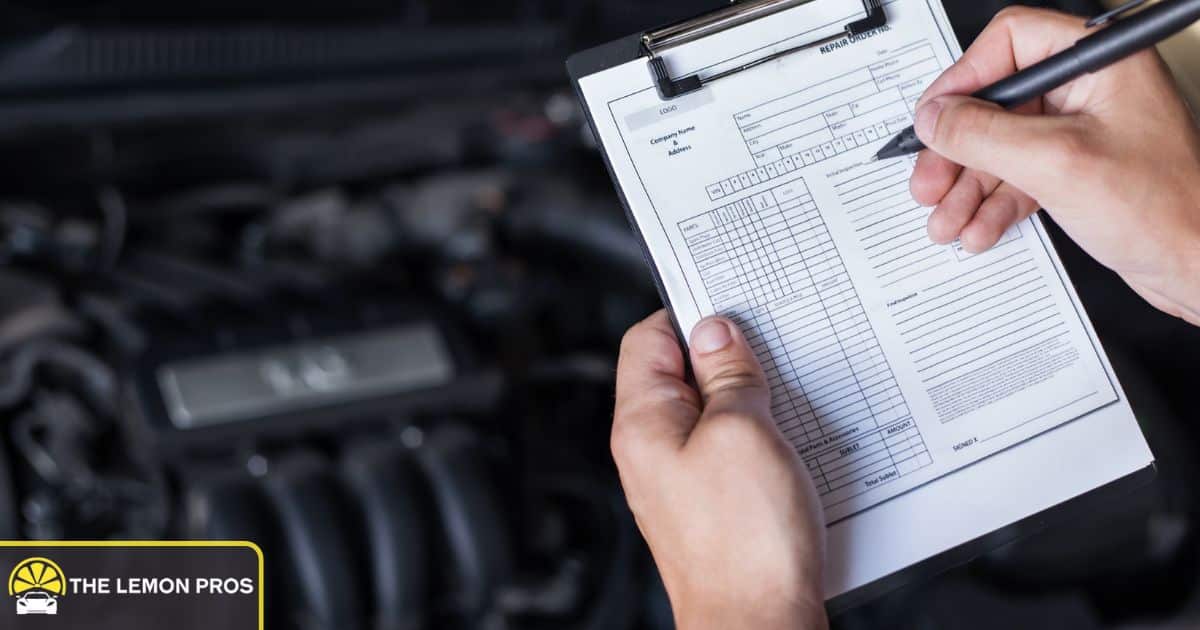
With your other documentation, you want to keep a record of all the repairs. Write down the issues you've experienced, the date, and what the dealership did to help. If you have a service contract or warranty, you want to clearly outline that the repair attempts were performed as per the agreement. If you received any receipts for repairs of the used vehicle, keep these for your records as well. In our experience, you should also keep a copy of any expense that you paid out of pocket.
To further document your case, take videos and photos of the defects. You can also ask for the written assessments of the mechanic, or get an independent evaluation from another technician if your dealership won't give you one. All of these records are going to help prove your case and make it easier to get the maximum settlement amount.
Step 4 - Contact a California Lemon Law Attorney
You can't be expected to know all of the relevant laws through the California Department of Transportation and other governing agencies, but a lawyer does. An experienced attorney knows what to expect during used car sales and can help get reimbursement for your troubles. If you have unrepairable defects with a used vehicle, it's time to consult a professional. You can reach out at the beginning of the claim to ensure your car qualifies and for help with walking through the steps.
Having a professional on your team ensures you don't lose out on valuable compensation. Even the smallest mistake can make a difference between driving a lemon and having a new car. Don't waste any more time. Get a consultation with The Lemon Pros today to see what you might be owed. Because we don't get paid until the case is won, you don't even need to pay any attorney fees upfront.
Step 5 - Consider Filing a Complaint or Lemon Lawsuit
After your attorney looks over the vehicle history report and your evidence, it may be time to file a lawsuit or complaint. Your lawyer will help you file with the California Department of Consumer Affairs, when necessary. An attorney can also outline the steps, showing how to file a Lemon Law claim in California.
With vehicles sold every day under shady pretenses, it's critical to have a professional on your team. If the dealer sold you a lemon vehicle and you can't get a resolution, you may need to file a lawsuit. The right attorney can help escalate the matter and get a quick resolution. Once the dealership sees that a law firm, not a private individual, is filing the claim, they are more apt to settle.
Can You Return a Used Car With Problems in California?
California does not give used car buyers an automatic right to return a vehicle. Once you sign the purchase contract, the sale is generally final, and neither your down payment nor the car comes back on demand. There is no general cooling-off period on a used car purchase in California, which surprises many buyers.
Dealer return policies are separate from state law. Some dealers offer their own return or exchange window as a courtesy, and a restocking fee often applies. Read the policy in writing before you assume one exists. A car sold as-is carries no promise of future repairs, and shifts most of the risk to the buyer.
The one cancellation right available at signing is the two-day contract cancellation option agreement. Under the Car Buyer's Bill of Rights, effective July 1, 2006, a dealer must offer this paid option on used cars priced under $40,000. It is not automatic. The buyer purchases it, and the fee scales with the price of the car.
The California Combating Auto Retail Scams Act, SB 766, takes effect October 1, 2026. It gives buyers a three-day right to cancel the purchase of a used vehicle priced at $50,000 or less. The right applies only if the buyer has not driven the vehicle more than 400 miles before cancelling, and a restocking fee may apply. SB 766 replaces the paid two-day cancellation option described above.
This new right differs from the federal FTC CARS Rule, which the Fifth Circuit vacated in January 2025 and which never took effect. Until October 1, 2026, the paid two-day option remains the only cancellation right at the point of sale.
For a covered defect, a return is rarely the real remedy. A Lemon Law claim or other legal action is the stronger path when repairs fail. A neutral third party may hear the dispute through a manufacturer's arbitration program, and an attorney can advise when litigation fits your situation better.
Can You Sue a Dealership for Selling You a Bad Car in California?
There are several reasons to sue a car dealer, one of which is valid if the dealership knowingly sold you a bad car. Get a complete inspection report from an independent mechanic and gather all of your evidence to show the attorney before filing a Lemon Law claim. Even if the case doesn't qualify for compensation through California state law, there is also a federal law that may be helpful, known as the Magnuson-Moss Warranty Act.
Not every recurring vehicle problem automatically qualifies under California Lemon Law. Some defects are repaired successfully during the first visit, while others may fall outside warranty coverage or involve normal wear and tear rather than a manufacturing defect. We've also seen situations where another legal theory provided a better path than a traditional Lemon Law claim. Evaluating the warranty, repair history, and dealership records together usually produces the clearest answer.
Why Shouldn't You Delay a California Lemon Law Claim?

There are deadlines to follow with Lemon Law if you expect compensation. It all depends on if there's a manufacturer's original warranty or other protection and what the term is. Before filing claims for defective cars, reach out to an attorney who understands the timelines for new and certified used cars.
Prompt action can lead to a quicker resolution, ensuring you get out of the vehicle before more problems arise. Once you've allowed for the reasonable number of attempts, whether two for serious bodily injury concerns or four for all others, you can file the claim. Get a free case evaluation to see what you are entitled to.
Unlike general consumer law firms, The Lemon Pros focuses exclusively on California Lemon Law matters. Since our attorneys handle these claims every day, we understand the documentation manufacturers expect, the defenses they commonly raise, and the evidence that often leads to favorable resolutions. Our goal is not simply to file a claim. We work to identify the strongest available remedy based on your warranty, repair history, and the specific facts surrounding your vehicle.
Need a Car Lemon Law Attorney For Your Used Car?
California Lemon Law is meant to protect consumers from being stuck with a defective car, and there are some provisions for used vehicles. If you feel that the dealer purposely sold you a bad car, you have legal rights. Take action promptly to ensure you get a quick resolution and to protect yourself from an accident.
For great advice, you want an experienced attorney on your side, such as the Lemon Pros. Our team of Lemon Law attorneys in California focuses exclusively on California Lemon Law cases and has helped drivers pursue claims, total loss disputes, and manufacturer buybacks. Contact us today for a free case evaluation to discuss your options at no cost.
Frequently Asked Questions
The answers below address the questions buyers ask us most about defective used cars in California.
Can I Sue a Dealership if They Sold Me a Bad Used Car?
Yes, you may have grounds if the dealer misrepresented the vehicle, breached a written warranty, or violated California consumer protection law. In our experience, the strongest claims involve undisclosed defects, broken warranty promises, or certified cars that did not meet inspection standards.
Can You Return a Used Car if It Has Problems in California?
California does not require dealers to accept returns, so it depends on your contract and any cancellation option you purchased. A defect covered by a warranty is handled through repair and Lemon Law remedies, not a simple return.
What Should You Do if You Bought a Bad Used Car?
Keep every repair order, written estimate, and notice, then give the dealer or manufacturer a chance to fix the same problem. If the problem persists, speak with a California Lemon Law attorney and consider filing a complaint with the DMV.
Does the Lemon Law Cover Used Cars Bought From Private Sellers?
Usually no. The Song-Beverly Act generally applies to sales by licensed dealers where a manufacturer's or dealer warranty is in force, and private-party sales are typically "as is," so Lemon Law protection rarely reaches them.
Legal Disclaimer: This article is general legal information, not legal advice. Reading it does not create an attorney-client relationship. Consumer warranty and vehicle law change over time, and every case turns on its own facts. Consult a qualified California attorney about your specific situation before you act.
Which Documents Should I Gather First?
Pull the sales contract, the buyers guide from the window, any warranty or service contract, the financing agreement, and every repair order since delivery. Add your own dated notes about what the salesperson told you. Those papers decide whether you have a warranty claim, a disclosure claim, or both.
Should I Keep Driving the Car?
If the defect touches safety, stop driving it and say so in writing when you request the repair. For a non-safety fault, normal use is generally fine and keeps your life moving. Either way, log the mileage and the dates so the record shows how the problem behaved over time.
The Dealer Says the Sale Is Final. Does That End It?
No. California has no general cooling-off period for vehicle sales, so a final sale is expected. That is separate from whether a warranty was breached or something was concealed at signing. A finished sale does not shield a dealer from a claim about what it failed to disclose.
How Do I Ask for a Repair in Writing?
Email the service department and the dealer's manager. Describe the symptom in plain terms, give the date it started, list the prior visits, and ask them to document each concern on the repair order. Keep the sent copy. A written trail turns a vague complaint into a dated record.
What if the Dealer Hid Prior Damage?
Undisclosed frame damage, a branded title, or a rolled-back odometer is a disclosure problem rather than a warranty one, and California law treats it seriously. Get a history report and an independent inspection to establish what was there before the sale. Those findings often sit alongside a warranty claim.
What Does It Cost to Have an Attorney Review My Purchase?
On a successful Song-Beverly claim the manufacturer pays reasonable attorney fees and costs, so representation is generally no cost out of pocket. An initial review of your contract and repair orders is normally free. Bring the paperwork rather than a summary, since the documents drive the analysis.

Michael Saeedian, Esq.
Founding PartnerMichael Saeedian, Esq. is a California Lemon Law attorney and a founding attorney of The Lemon Pros; he develops tailored strategies to pursue the full compensation you're owed.
View Attorney Profile →