

Short answer
You can bring a claim, though in California a lemon law claim usually runs against the manufacturer rather than the dealer, because it is the manufacturer's warranty that was breached. A claim against the dealer is the right route where the issue is what you were told at the point of sale: a hidden accident history, a branded title, or an odometer that does not match.
If a car has a serious flaw that compromises its usefulness, safety, or worth, you can file a lawsuit against the dealer for selling you a lemon. You may be entitled to money or other compensation if the dealership failed to disclose information prior to selling you the vehicle. Before filing a claim, gather and organize all records regarding the issues your vehicle has had and any repair records. In many cases, it is often necessary to send a written demand letter to the dealership before proceeding with a lawsuit.
The Lemon Pros are experts in navigating the Lemon Law and defective vehicles. Since our practice area is focused on lemon vehicles, we have been able to secure compensation for drivers. Contact us today to get a free consultation about your branded title vehicle!
In this guide, we cover your legal options if the dealership sold you a bad car, explain the Lemon Laws, and show you how to file a claim successfully.
What is a Lemon and How Does Lemon Law Protect You?

A lemon is a car with serious defects that affect its safety, value, or use, especially when the same issue continues after several repair attempts. The problem must appear soon after purchase and persist despite repeated efforts to fix it.
Common issues that qualify include engine failure, transmission defects, brake problems, or electrical faults that remain unresolved after several repair attempts. If the problem persists, consumers are entitled to seek compensation, a refund, or a replacement through a Lemon Law case.
All states have Lemon Laws that typically apply to new cars, and some states also extend protection to most used cars under specific conditions. Lemon Laws in all states protect new cars that are still under warranty, while some states cover used vehicles depending on the contract and sale terms. Most states require formal written notice to the manufacturer, detailing defects and repair records, before legal action begins.
According to the National Highway Traffic Safety Administration (NHTSA), over 100,000 consumer vehicle complaints are filed each year. Many of them involve serious defects such as engine failure, transmission issues, and braking problems.
Unlike a standard warranty claim, Lemon Law protections allow consumers to fight for a refund or replacement if repairs fail. Legal options include claims under the state’s Lemon Law, breach of warranty under the Magnuson-Moss Warranty Act, or lawsuits for dealership fraud. The Uniform Commercial Code (UCC) also ensures the car must be fit for its ordinary purpose.
Even if a car is sold as-is, car dealers must disclose defects that affect safety or value, and courts may allow revocation of acceptance for severe issues. You may be able to file a lawsuit against the dealership to seek compensation for losses caused by dealership fraud or report deceptive practices to the state attorney general's office for consumer protection.
It is essential to keep records of all communications and repairs related to the defective vehicle before filing a lawsuit. All communication with the dealership should be documented, and you should collect supporting documentation like invoices, receipts, and repair records. If the dealership declines to fix the car, note the refusal and why.
What Are the Legal Grounds for Suing a Dealer for Selling a Lemon?

If you’ve been sold a defective vehicle, several legal grounds may justify taking action against the dealer. A qualified consumer attorney can help you evaluate your case, gather evidence, and determine the most effective strategy.
One of the most frequent claims is breach of warranty. This occurs when a dealer disregards an implied warranty that guarantees that most used cars are suitable for simple, dependable transportation. It could also be an express warranty, which is an explicit written promise about the vehicle's condition. When a car consistently malfunctions despite these guarantees, particularly while you are still paying for it, this violation can serve as the basis for a compelling legal claim.
Another frequent claim concerns fraud and misrepresentation. This happens when a dealer purposefully omits crucial information or makes false claims about the state of the car. This can include hiding prior damage, failing to disclose major defects, or creating the false impression that a car is in good working order, ultimately leading you to buy defective vehicles under pretenses. In such cases, the law recognizes that your decision was influenced by inaccurate or incomplete information, strengthening your position in a dispute.
Beyond these claims, state Lemon Laws also provide a structured legal basis for pursuing compensation, particularly when a vehicle cannot be repaired after a reasonable number of attempts. While these laws are often associated with manufacturers, they can also apply to dealers in certain situations, reinforcing your right to seek relief when a defective vehicle fails to meet expected standards.
However, timing is critical, as every claim is subject to a statute of limitations, typically ranging from one to four years depending on the nature of the case. This makes it essential to act quickly to preserve your ability to recover damages or negotiate a resolution.
Finally, understanding the distinction between suing a dealer and a manufacturer can significantly impact your approach, as manufacturers are generally responsible for warranty-related defects, while dealers are more often held accountable for fraud, misrepresentation, or improper sales practices. In many situations, pursuing claims against both parties can strengthen your case and improve your chances of reaching a favorable outcome.
Case Study: Engine Defect in a 2022 Sedan
One of our clients purchased a 2022 sedan that repeatedly failed emissions tests and engine diagnostics within 6 months of purchase. After gathering repair records and sending a written demand letter, The Lemon Pros helped her file a claim. Within 90 days, she received a full refund plus coverage for rental car expenses, totaling over $42,000.
Steps to Take Before Suing a Dealer for a Lemon

Filing a lawsuit against a vehicle dealership can be an overwhelming process, but there are laws in place to protect consumers. Taking the right steps before pursuing legal action not only strengthens your case but can also increase your chances of a favorable outcome without going to court.
Step 1: Document All Vehicle Problems and Repair Attempts
Start by keeping thorough records of every problem with the vehicle, particularly if it involves a significant flaw that compromises its usefulness, value, or safety. The dealer or manufacturer must be given a fair number of opportunities to fix it, and the problem must be reported within a certain amount of time or mileage. In accordance with Lemon Laws, such as the California Lemon Law, consumers are required to notify the dealer of any problems within a certain time frame and permit reasonable repair attempts.
Step 2: Notify the Dealer and Manufacturer in Writing
Formally notify the dealer and manufacturer about the defects. Most states require formal written notice to the manufacturer, detailing defects and repair history, often via certified mail, before legal action. Keeping all communications in writing helps establish a clear paper trail that can support your claim.
Step 3: Understand Your Legal Protections
Even if a car is sold as-is, courts may allow revocation of acceptance for severe defects that indicate the dealer did not deliver a promised vehicle. The Uniform Commercial Code (UCC) provides an implied warranty of merchantability, ensuring the car must be fit for its ordinary purpose.
Step 4: Get an Independent Mechanic’s Inspection
Obtain a report from a qualified mechanic to confirm the defects and support your claim. This can be critical when seeking compensation, whether in the form of a refund, replacement, or payment.
Step 5: Keep Records and Investigate the Dealer
Maintain all service records, receipts, and written communications. You should also investigate the dealer’s business form to determine the correct party to sue and check for a history of complaints against the dealer to strengthen your case.
Step 6: Identify Possible Fraud or Misrepresentation
You might be able to file a lawsuit if the dealership sold you a car that they knew had issues and attempted to conceal them. Customers are protected from auto dealership fraud by laws, and you have the right to sue the dealership if they lied to you during the sale, refused to fix the car under warranty, or withheld crucial information about its condition. You may have a dealership fraud case if the dealership withheld information before selling you the car.
Step 7: Consider Alternatives Before Filing a Lawsuit
Before heading to court, consider mediation or arbitration as alternatives. You can also report the dealership to the state attorney general’s office for deceptive trade practices if they refuse to cooperate. In our experience, clients who document every repair and send a certified demand letter are far more likely to receive a full refund.
Taking these steps ensures you are well-prepared if legal action becomes necessary. By building strong documentation, understanding your rights, and exploring all available options, you place yourself in the best position to resolve the issue effectively.
The Lemon Pros 5-Step Action Plan
Dealing with a defective vehicle can feel overwhelming, but taking the right steps early can make a big difference in resolving the issue. The Lemon Pros have created a clear, actionable framework to guide you through the process of documenting, reporting, and pursuing compensation for a lemon vehicle. Following these steps ensures you stay organized, protect your rights, and maximize your chances of a successful outcome.
- Document – Gather all repair records, invoices, and communication.
- Notify – Send a formal written notice to the dealer/manufacturer.
- Inspect – Obtain an independent mechanic’s report confirming defects.
- Evaluate – Consult a Lemon Law attorney for case strength and strategy.
- File & Negotiate – File a claim and pursue a refund, replacement, or damages.
What Compensation Can You Expect if You Sue a Dealer?
It is easier to set reasonable expectations and make sure you pursue the full value of your claim if you know what you might get after suing a dealer. The severity of the defect, the number of attempts at repair, and the relevant state laws usually determine compensation in Lemon Law and dealership fraud cases.
Refunds, replacement cars, or coverage for necessary repairs are frequently the main remedies. A replacement car offers a comparable make and model with no flaws, whereas a refund might include the purchase price less a usage fee. Incidental damages, such as towing fees, rental car costs, or other out-of-pocket losses directly associated with the defective vehicle, may also be recoverable under certain claims.
Beyond these, consumers may also be entitled to recover attorney fees and court costs, particularly under many Lemon Laws that are designed to protect buyers and encourage legal enforcement. This can significantly reduce the financial burden of pursuing a claim and make it easier to take action against a non-compliant dealer.
However, compensation is not unlimited. Different Lemon Laws impose certain limitations and caps, which may affect how much you can recover. These limits can vary based on factors such as how long you have owned the vehicle, how many miles it has been driven, and whether the defect qualifies under specific legal definitions. The table below properly illustrates the different types of compensation.
| Compensation Type | Description | Typical Amount/Range | Legal Requirements | Notes |
|---|---|---|---|---|
| Refund | Return of the purchase price, often minus a usage fee | Full or partial purchase price | Vehicle must meet Lemon Law criteria: substantial defect, proper notification. | May include tax, registration, and fees in some states |
| Replacement Vehicle | A new or comparable vehicle provided in exchange | Similar make and model | Defect qualifies under Lemon Laws; dealer was given reasonable repair attempts. | Usually for serious or recurring defects |
| Repairs | Cost to fix defects covered under warranty | Varies depending on repair costs | Defects must be reported within the warranty period; the dealer must be given a chance. | Only covers necessary repairs; cosmetic or unrelated repairs are usually excluded. |
| Incidental Damages | Costs caused by the defective vehicle, e.g., towing, rental cars | Depends on documented expenses | Must be documented and directly related to the defect | Some states cap recovery; they require receipts or proof of costs |
| Attorney Fees | Legal costs incurred while pursuing a claim | Often fully recoverable under Lemon Laws | The case must qualify under the Lemon Law; the attorney must follow state procedures. | Encourages consumers to take legal action without financial risk |
The timeline for resolution can also vary. Some cases are resolved within a few months through settlement, mediation, or arbitration, while others may take longer if they proceed to litigation. Outcomes often depend on how well the case is documented and whether the dealer or manufacturer is willing to negotiate.
Average Payout if the Dealership Sold a Defective Vehicle
The average Lemon Law settlement may be between $40,000 and $50,000, depending on the type of vehicle you drive and the trouble your car faces. The best way to ensure you get everything you deserve is to hire a Lemon Law attorney who has a proven track record of winning. Best of all, many lemon attorneys work on a contingency basis, meaning there's no obligation to pay anything until the case has been won.
How to Avoid Buying a Lemon in the Future
While there may be some security in knowing that you can get compensation for a defective car, it's best to prevent the issue in the first place. Here are a few tips to help you avoid buying a lemon car
- Always get a vehicle history report from a reputable website.
- Ask for a pre-purchase inspection from a third-party mechanic.
- Check dealer reviews and investigate its reputation on sites such as Better Business Bureau (BBB).
Above all, take your time making a decision. If something doesn't feel right about the deal, don't feel obligated to sign on the dotted line. Sleep on it and see how you feel the next day. It's always better to be prepared than to regret your decision later.
When Should You Consult a Lemon Law Attorney?
You should consult a Lemon Law attorney when your case becomes complicated, especially if there is a substantial defect, repeated failed repairs, or the dealer refuses to cooperate or accept responsibility. Legal help is also important when warranty coverage is disputed or your claim is being delayed.
An attorney can provide a professional case evaluation, determine if your claim qualifies, and identify the best legal path forward. They handle negotiations, ensure all legal requirements are met, and work to secure a refund, replacement, or financial recovery.
“Many drivers don’t realize that even vehicles sold as-is may qualify for compensation if defects are substantial,” says Michael Saeedian, lead attorney at The Lemon Pros. “Documenting repairs and communications early is key to a successful claim.”
Getting legal representation can significantly improve your outcome, particularly in contested cases. For guidance, consider reaching out for a free case evaluation with trusted Lemon Law advocates in Beverly Hills to understand your options and next steps.
Need Legal Support for Suing a Dealership?
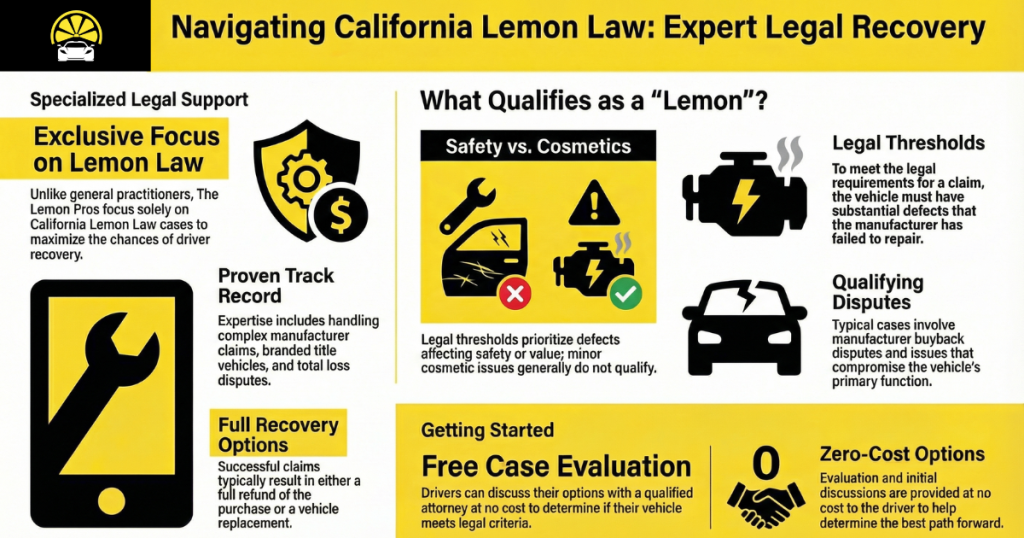
Unlike general attorneys, we focus exclusively on California Lemon Law cases. Our track record includes handling branded title vehicles, buyback disputes, and manufacturer claims. This gives drivers the highest chance of full recovery. While Lemon Law claims can lead to refunds or replacements, not every defective vehicle qualifies. Minor cosmetic defects or issues unrelated to safety or value may not meet legal thresholds.
For great advice, you want a qualified Lemon Law attorney on your side, such as The Lemon Pros. Our team of Lemon Law attorneys in California focuses exclusively on California Lemon Law cases and has helped drivers pursue claims, total loss disputes, and manufacturer buybacks. Contact us today for a free case evaluation to discuss your options at no cost.
Frequently Asked Questions
Navigating the Lemon Law can feel confusing, even when the protections seem straightforward. Here’s a clear breakdown of the questions drivers ask most often, explained in practical terms.
Can I Sue a Dealer if My Lemon Car Is Out of Warranty?
Yes, you can sue a dealer even if your vehicle is out of warranty, especially if it qualifies as a lemon due to a substantial defect affecting use, safety, or value. Before filing a claim, gather and organize all records regarding the issues your vehicle has had and any repair records to support your case.
How Long Do I Have to File a Lemon Law Claim?
The time to file a claim varies by state, but you generally must act within the statute of limitations or mileage limits specified by local Lemon Laws. Sending a written demand letter to the dealership may also be required before initiating a lawsuit.
What Is the Difference Between Suing a Dealer and a Manufacturer?
Suing a dealer typically addresses misrepresentation, fraud, or failure to repair under warranty, while suing the manufacturer focuses on defects covered under the original warranty or Lemon Law. You may be entitled to money or other compensation if the dealership failed to disclose information before selling you the vehicle.
Do I Need a Lawyer to Sue a Lemon Car Dealer?
You are not always required to have a lawyer, but legal representation can help navigate complex claims and maximize potential compensation. Lawyers can also ensure proper documentation and procedure, including sending demand letters when necessary.
What Damages Can I Recover Under Lemon Law?
You may recover a refund, a replacement vehicle, repairs, incidental costs, and sometimes attorney fees, depending on your state’s laws. Compensation may also include money for losses if the dealership failed to disclose defects before the sale.
What Evidence Supports a Claim Against the Dealer?
Sale-time evidence carries the weight here: the purchase contract, the window form, the advertisement or online listing, text messages and emails, and the vehicle history report. Add an independent inspection documenting damage nobody disclosed. The question is what you were told and shown, so save anything that captures it.
Can I Bring Claims Against the Dealer and the Manufacturer at the Same Time?
Yes, where the facts support both. A warranty claim runs against the manufacturer for a defect its authorized repairs did not fix, while a disclosure or misrepresentation claim runs against the seller for what happened at signing. They rest on different proof and can move forward together.
What if My Contract Has an Arbitration Clause?
Many dealer contracts include one, and it can affect where a claim against that dealer gets heard. Manufacturer arbitration programs are a different thing: they are optional in California and their outcomes are generally not binding on you. Have the contract read closely before assuming any clause controls your situation.
What Does an Odometer Discrepancy Mean for My Case?
A mileage reading that conflicts with prior service records, smog checks or title history points to a rollback or a reporting error. Federal and state law require accurate odometer disclosure on transfer. Pull the vehicle history, compare each recorded reading by date, and keep the disclosure statement you signed.
Do I Have to Return the Car Before Bringing a Claim?
No. Keep driving it if it is safe to do so, and keep it available for inspection. The vehicle and its repair records are your evidence. If it is unsafe to drive, document why, park it, and get advice quickly rather than disposing of it on your own.
Legal Disclaimer: This content is provided for informational purposes only and does not constitute legal advice. Lemon Law eligibility and outcomes vary based on individual circumstances, vehicle history, and applicable laws. Reading this article does not create an attorney-client relationship. For legal advice regarding your specific situation, consult a qualified Lemon Law attorney.

Michael Saeedian, Esq.
Founding PartnerMichael Saeedian, Esq. is a California Lemon Law attorney and a founding attorney of The Lemon Pros; he develops tailored strategies to pursue the full compensation you're owed.
View Attorney Profile →